Understanding Shade in the Garden
Not all shade is the same. Before choosing plants for your garden, it’s important to understand how much sunlight an area actually receives. A plant that thrives in light shade may struggle in deep shade, while some shade-loving plants perform best with a little morning sun.
Light Shade (Bright Shade)
Sunlight: 4–6 hours of sun per day, usually morning sun or filtered sunlight.
Common Locations:
East-facing gardens
Areas beneath trees with open canopies
Spots that receive morning sun and afternoon shade
Characteristics:
Bright conditions without intense afternoon heat
Many flowering shade plants perform well here
Soil tends to dry more slowly than in full sun
Plants That Thrive:
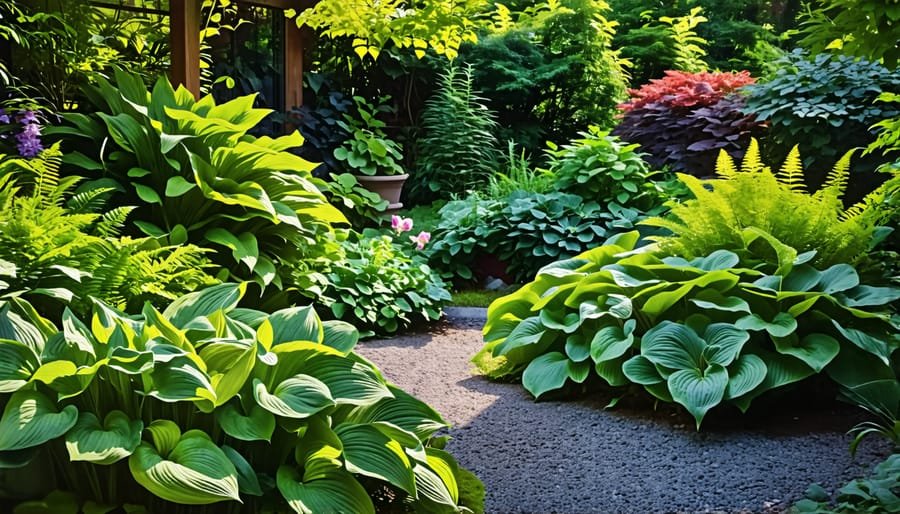
Hosta
Heuchera (Coral Bells)
Astilbe
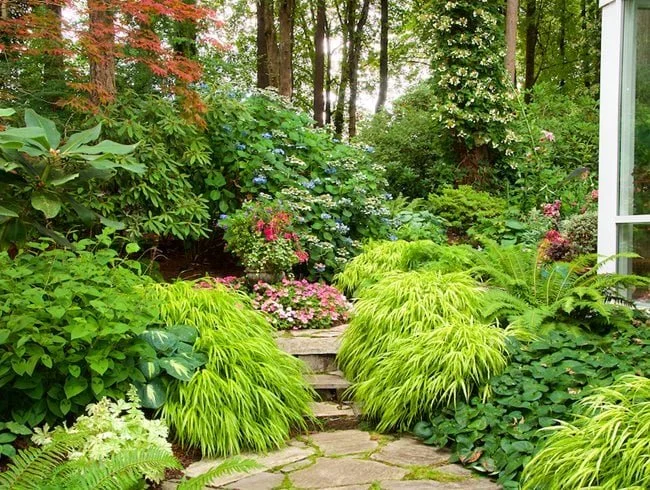
Japanese Forest Grass
Brunnera
Medium Shade (Partial Shade)
Sunlight: 2–4 hours of direct sun per day, often filtered through trees.
Common Locations:
North or northeast sides of buildings
Under mature deciduous trees
Areas shaded for much of the day
Characteristics:
Cooler temperatures
Less intense light
Ideal for many woodland plants
Plants That Thrive:
Hellebores
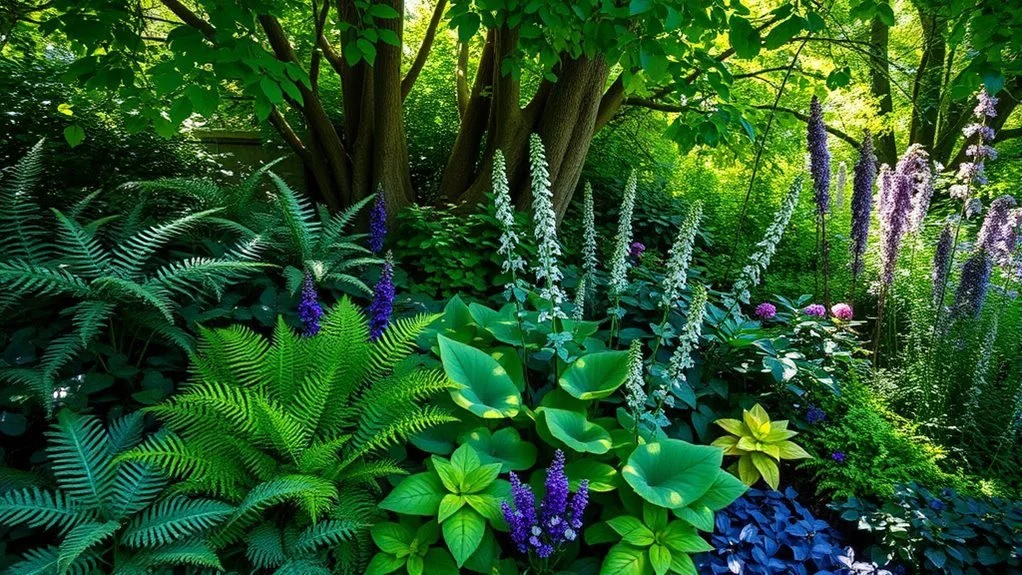
Ferns
Pulmonaria (Lungwort)
Epimedium
Bleeding Heart
Deep Shade (Full Shade)
Sunlight: Less than 2 hours of direct sun per day.
Common Locations:
Under dense evergreen trees
North side of buildings or fences
Areas between structures with very limited sunlight
Characteristics:
Cool and often moist
Limited flowering options
Foliage becomes the primary source of color and texture
Plants That Thrive:
Ferns
Hosta
Japanese Forest Grass
Sweet Woodruff
Vancouveria (Inside-Out Flower)
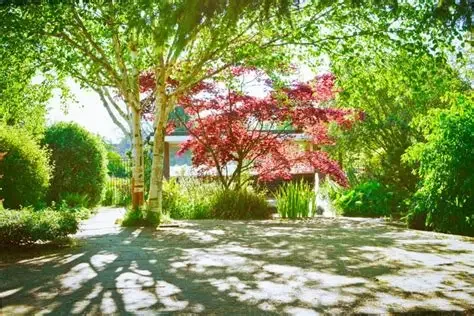
Dappled Shade
Sunlight: Sunlight filtered through tree branches, creating shifting patterns of sun and shade throughout the day.
Common Locations:
Beneath Japanese maples
Under large deciduous trees
Woodland gardens
Characteristics:
Often considered the “goldilocks” of shade conditions
Many shade-loving plants grow exceptionally well
Mimics natural woodland environments
Plants That Thrive:
Hellebores
Hosta
Brunnera
Astilbe
Trillium
A Pacific Northwest Gardening Tip
Many gardeners think they have “shade” when they actually have light shade or dappled shade. Before selecting plants, spend a sunny day observing the area and note how many hours of direct sunlight it receives. You’ll have much better success matching plants to your site conditions.
Remember: Morning sun is gentler than afternoon sun. A location with four hours of morning sun may still be considered a shade garden, while four hours of hot afternoon sun can be challenging for many shade-loving plants.
The best shade gardens combine a variety of foliage colors, textures, and bloom times to create interest throughout the year—even in the darkest corners of the Pacific Northwest garden. 🌿