
How to Grow and Care for Rhododendrons in the Pacific Northwest
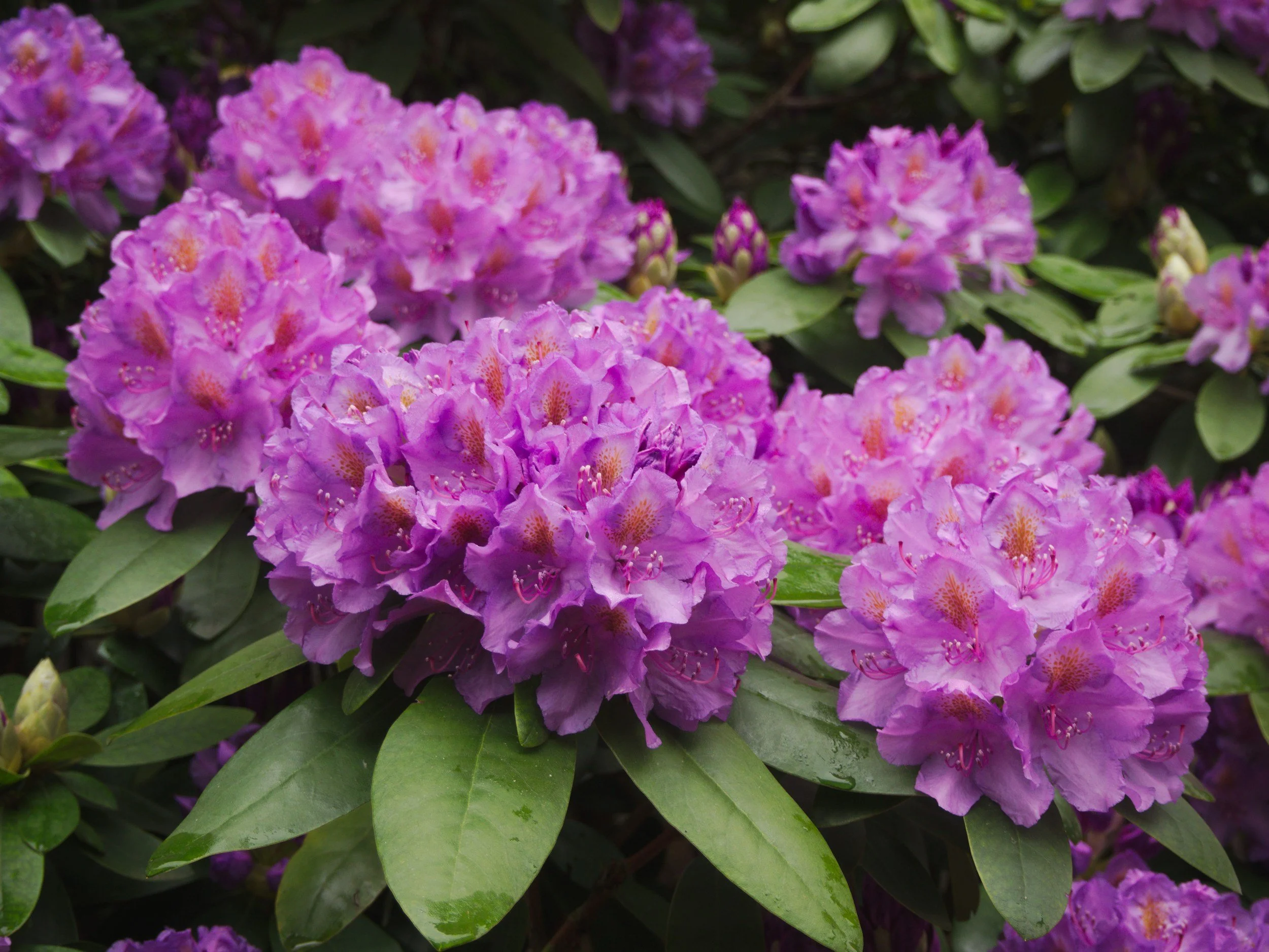
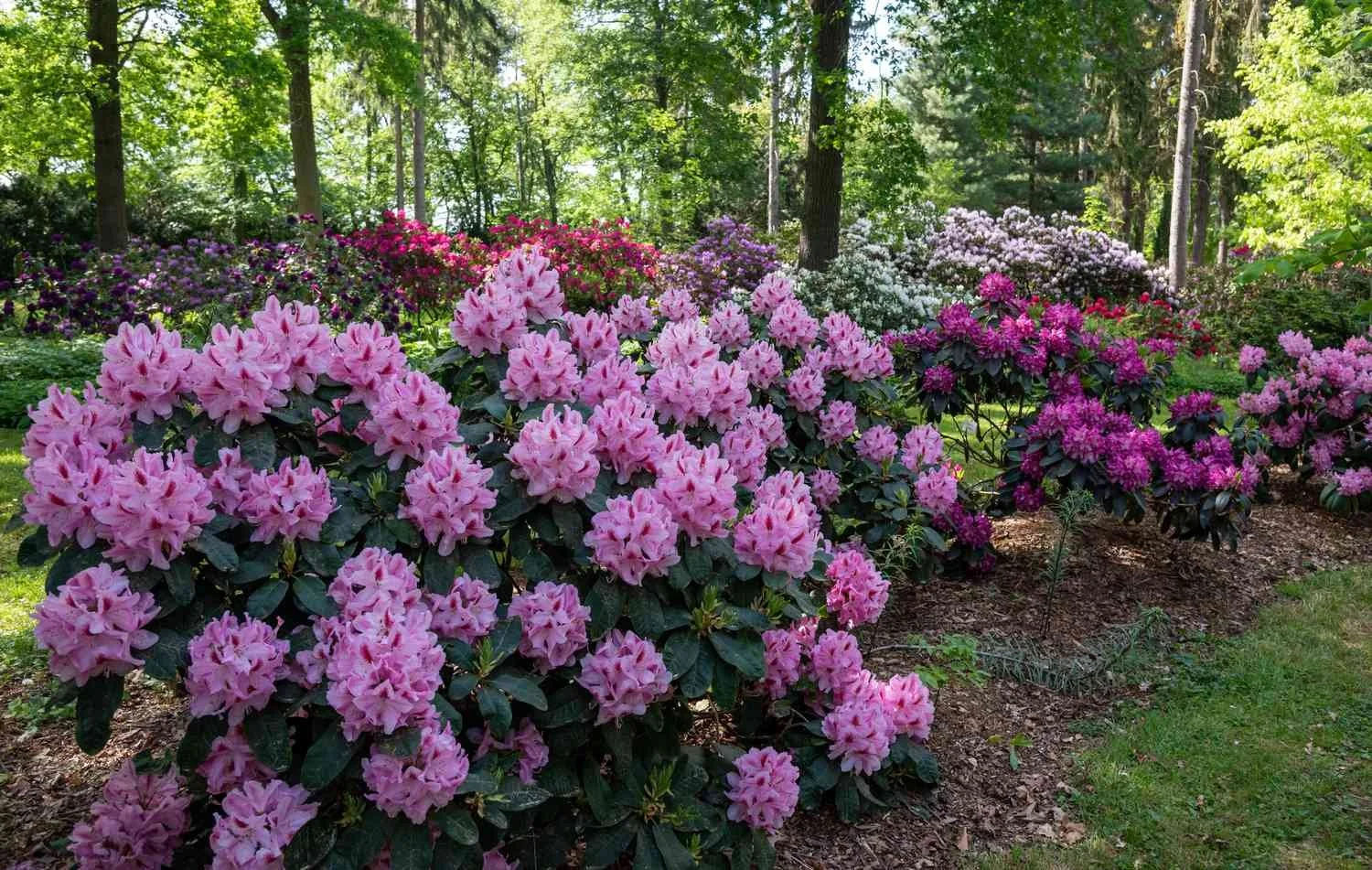
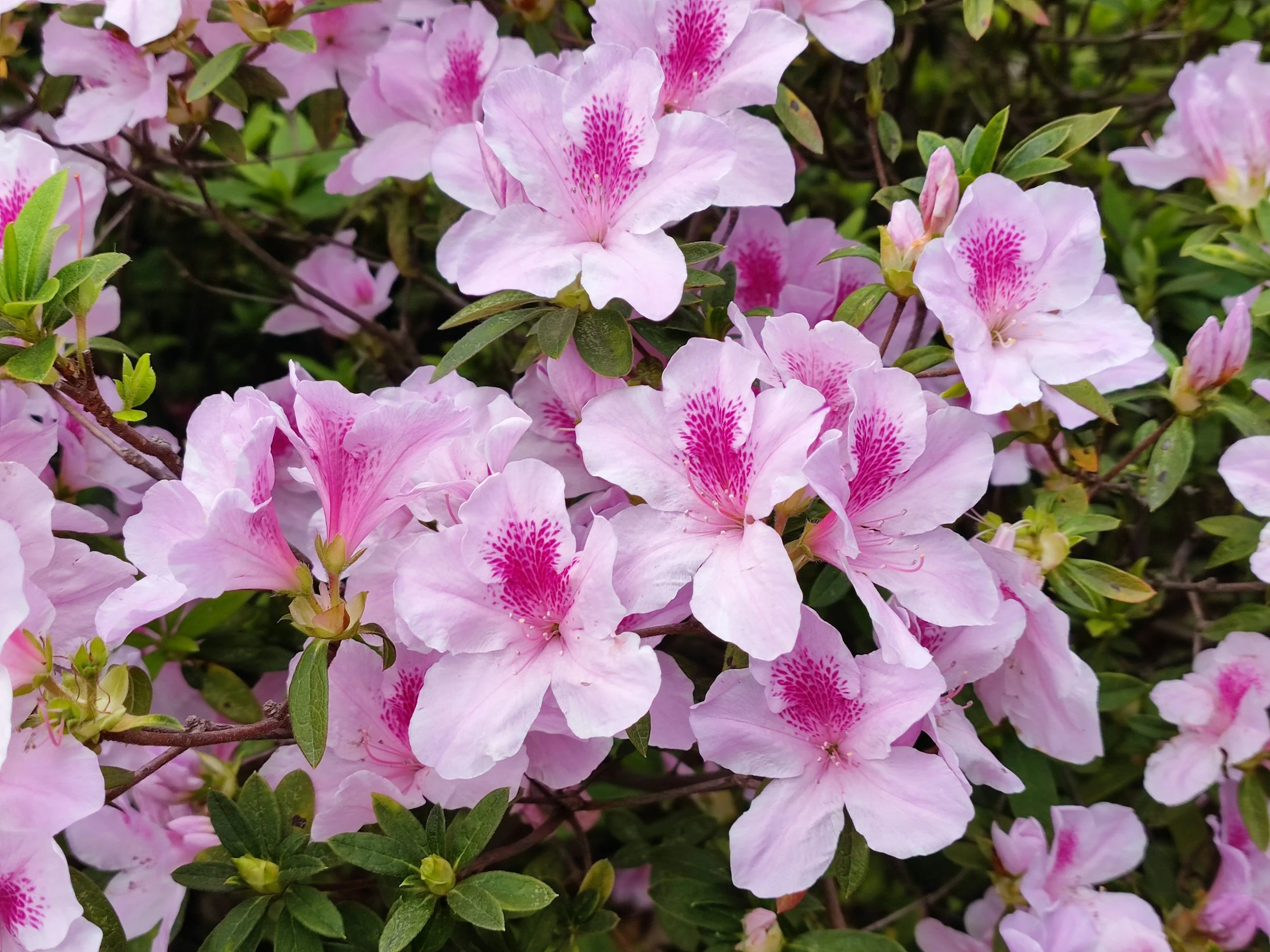
Living in the Pacific Northwest, we are fortunate to have an abundance of rhododendrons. Our mild temperatures, regular rainfall, and naturally acidic soils make this an ideal place to grow them.
Once established, rhododendrons are generally easy to care for and do not require a lot of attention. With the right planting location, an occasional feeding, and a little yearly maintenance, they can provide beautiful spring color for many years.
How to Plant a Rhododendron

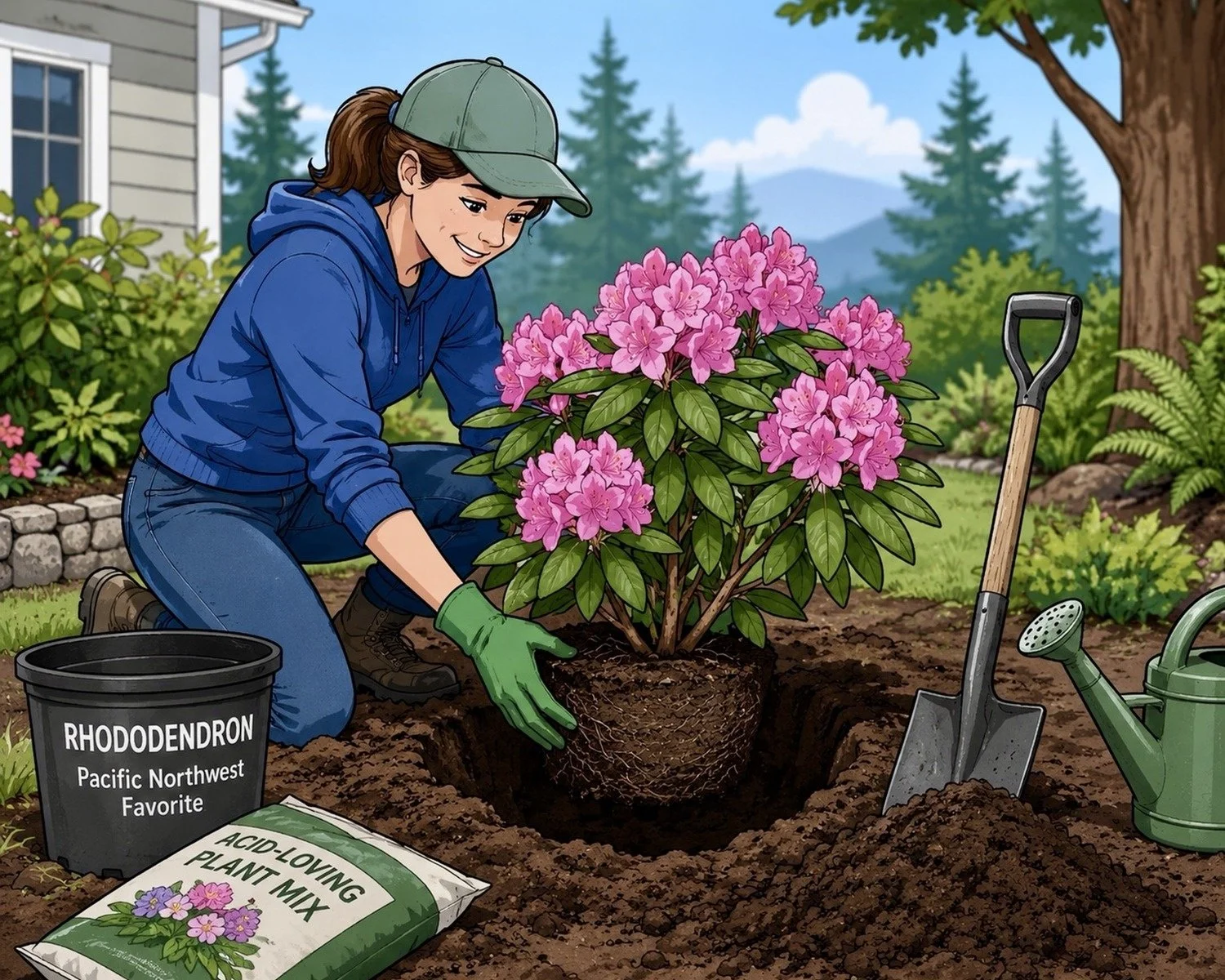
Rhododendrons are best planted in spring or early fall, which gives the roots time to become established before summer heat or winter cold arrives.
They prefer dappled shade or a location with partial sun. Too much direct afternoon sun can scorch the leaves, while deep shade may reduce the number of flowers the plant produces.
Rhododendrons grow best in acidic, well-draining soil with a pH of around 4.5 to 5.5. If your soil is heavy or drains poorly, amend it with compost or other organic material before planting.
Spacing will depend on the mature size of the variety. Most should be planted about two to six feet apart to allow enough room for growth, good air circulation, and easier maintenance.
Dig a hole that is as wide as the root ball, but no deeper.
Position the plant so the top of the root ball is level with, or slightly above, the surrounding soil.
Backfill around the root ball with the amended soil and gently firm it into place.
Water the plant thoroughly.
Add a layer of pine needles, shredded bark, or another acidic mulch to help retain moisture and protect the shallow roots.
Avoid piling mulch directly against the trunk or stems of the plant.
Rhododendron Flowers
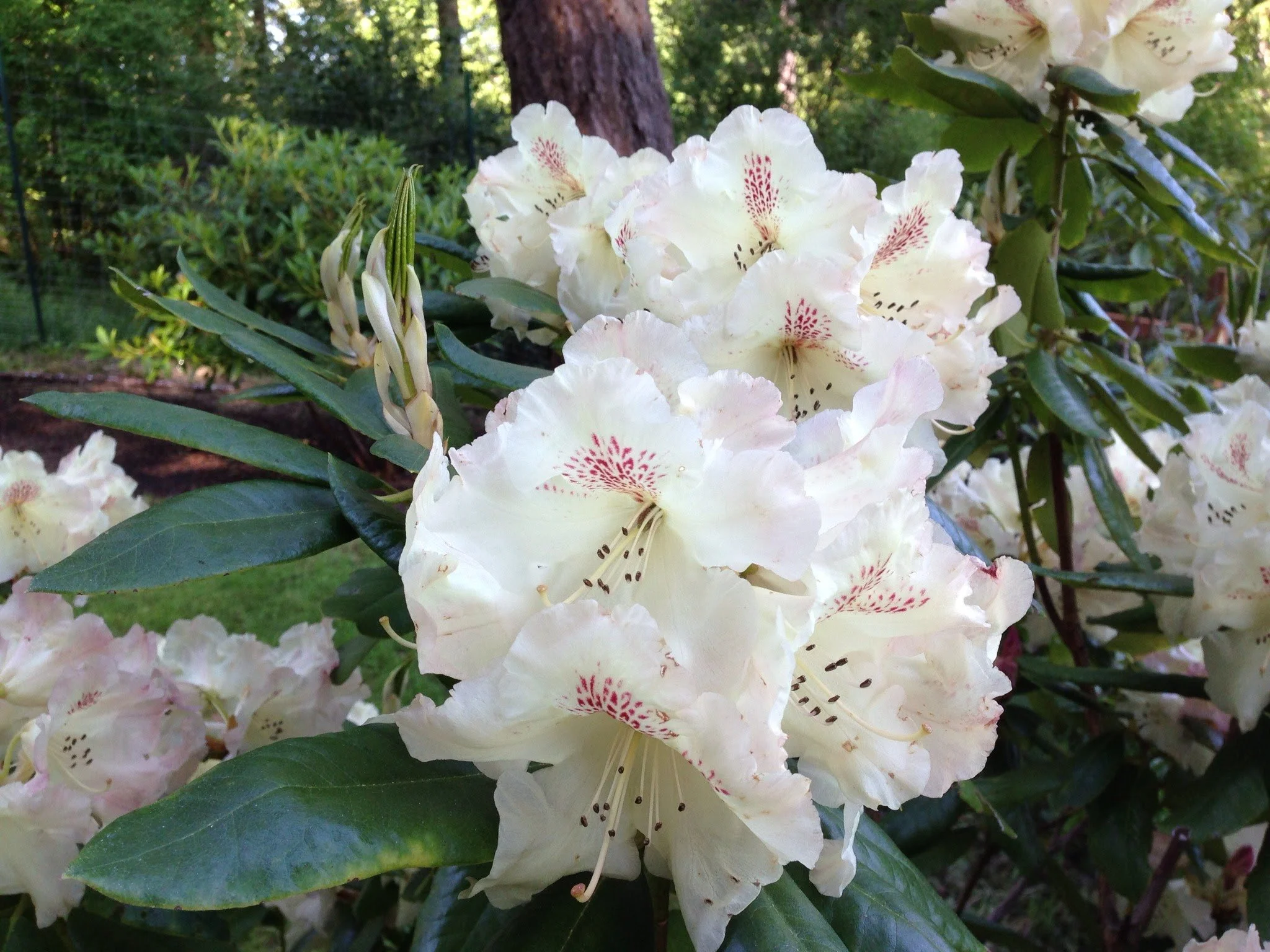
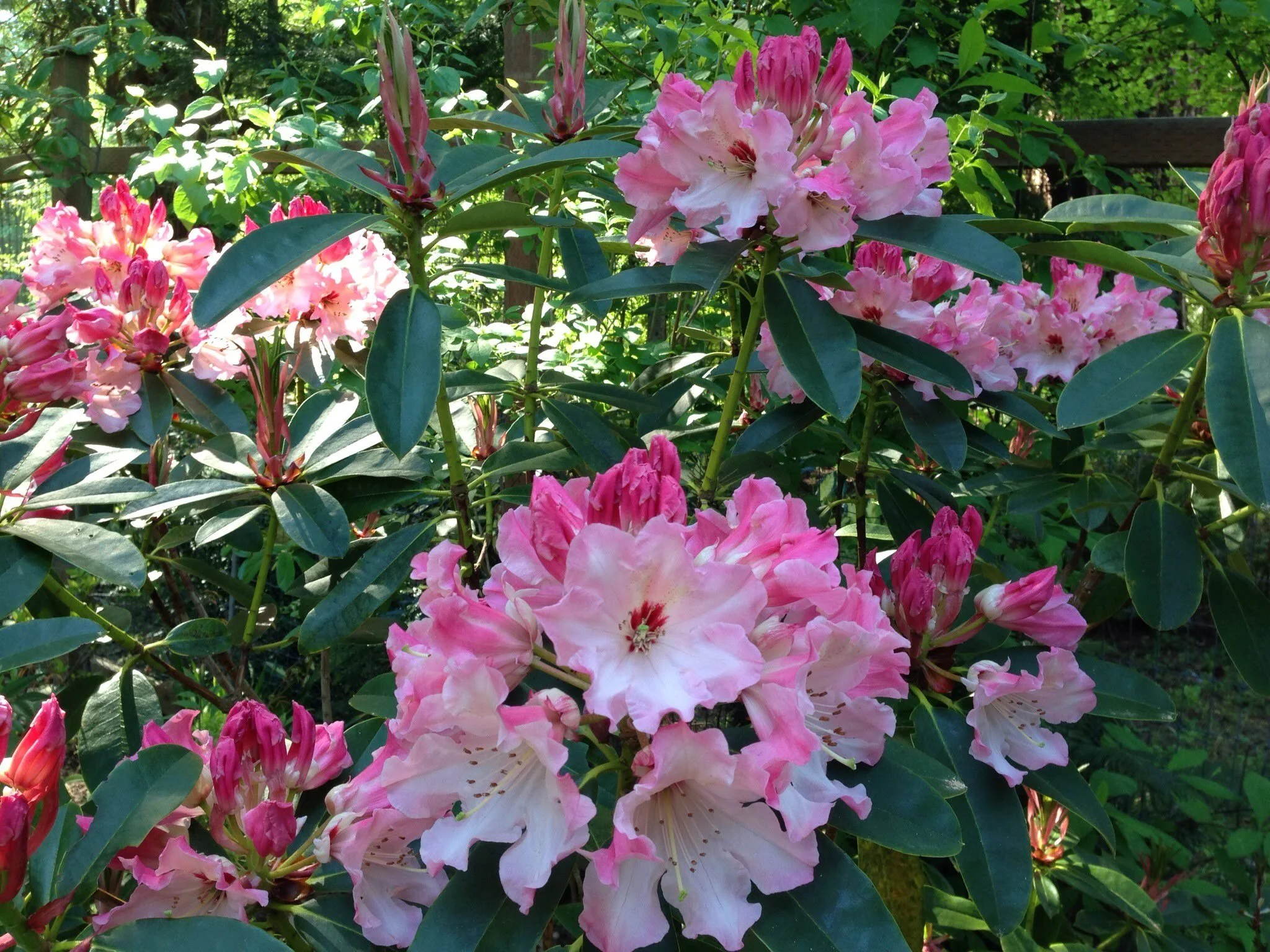
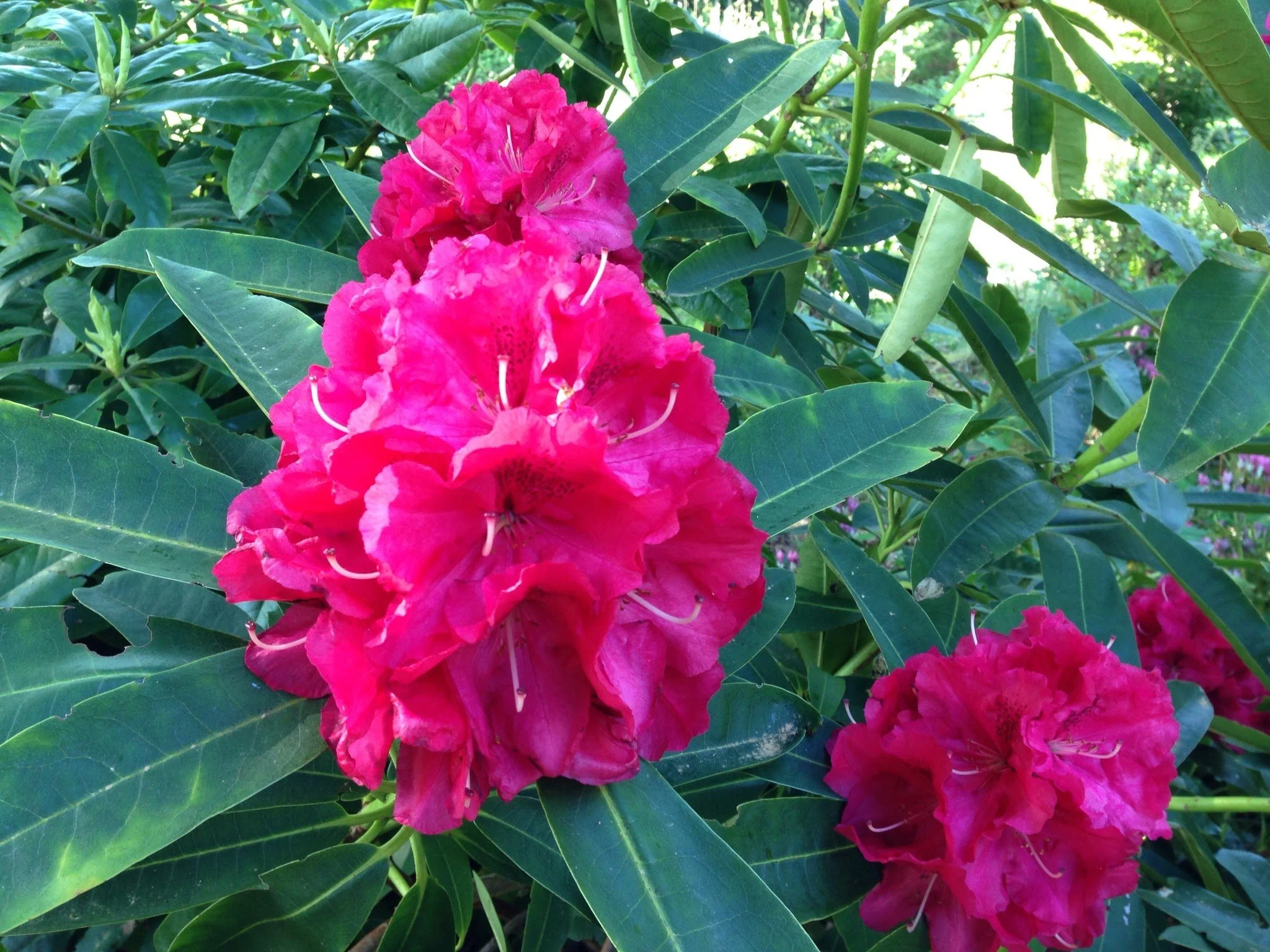
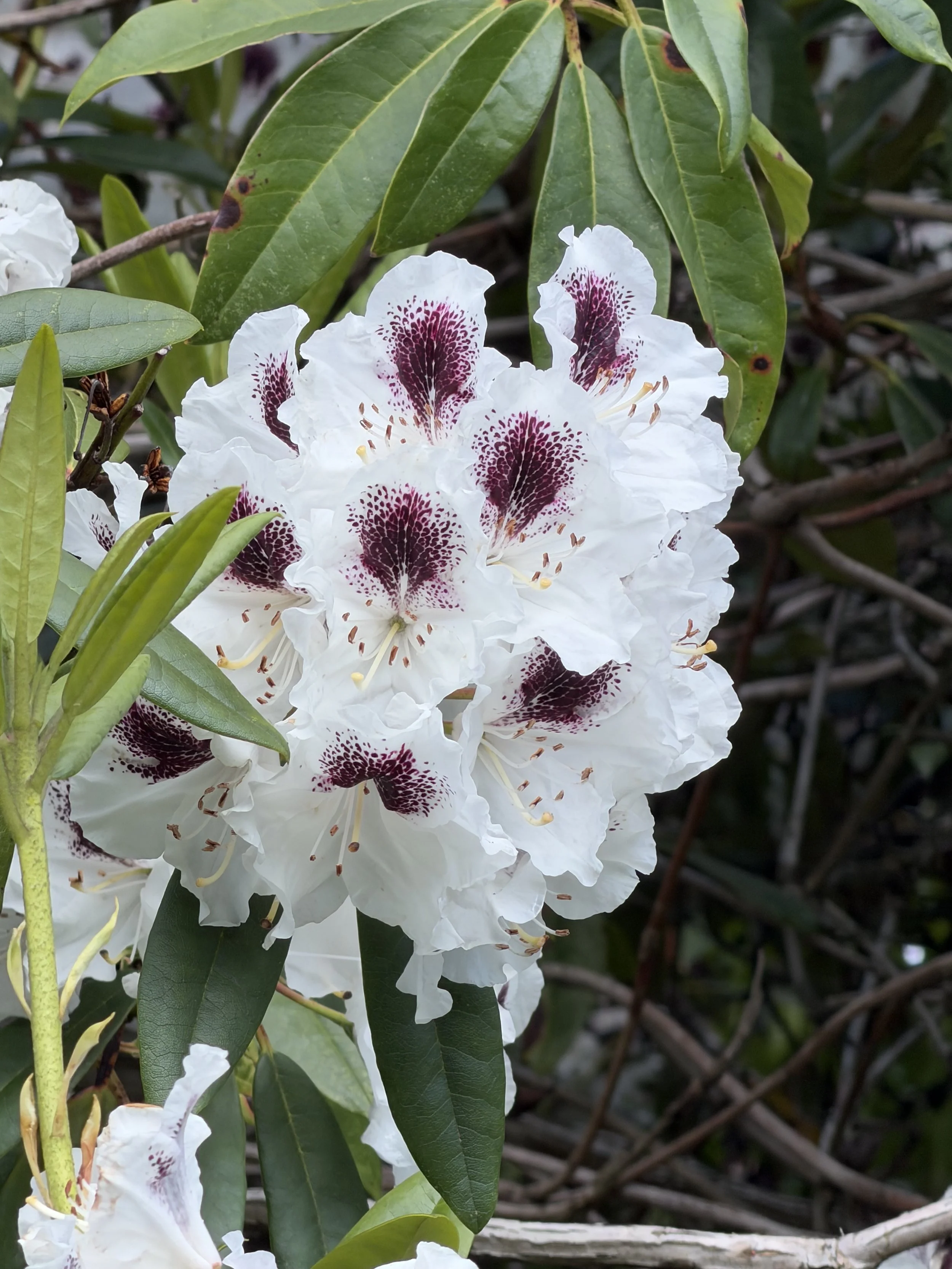
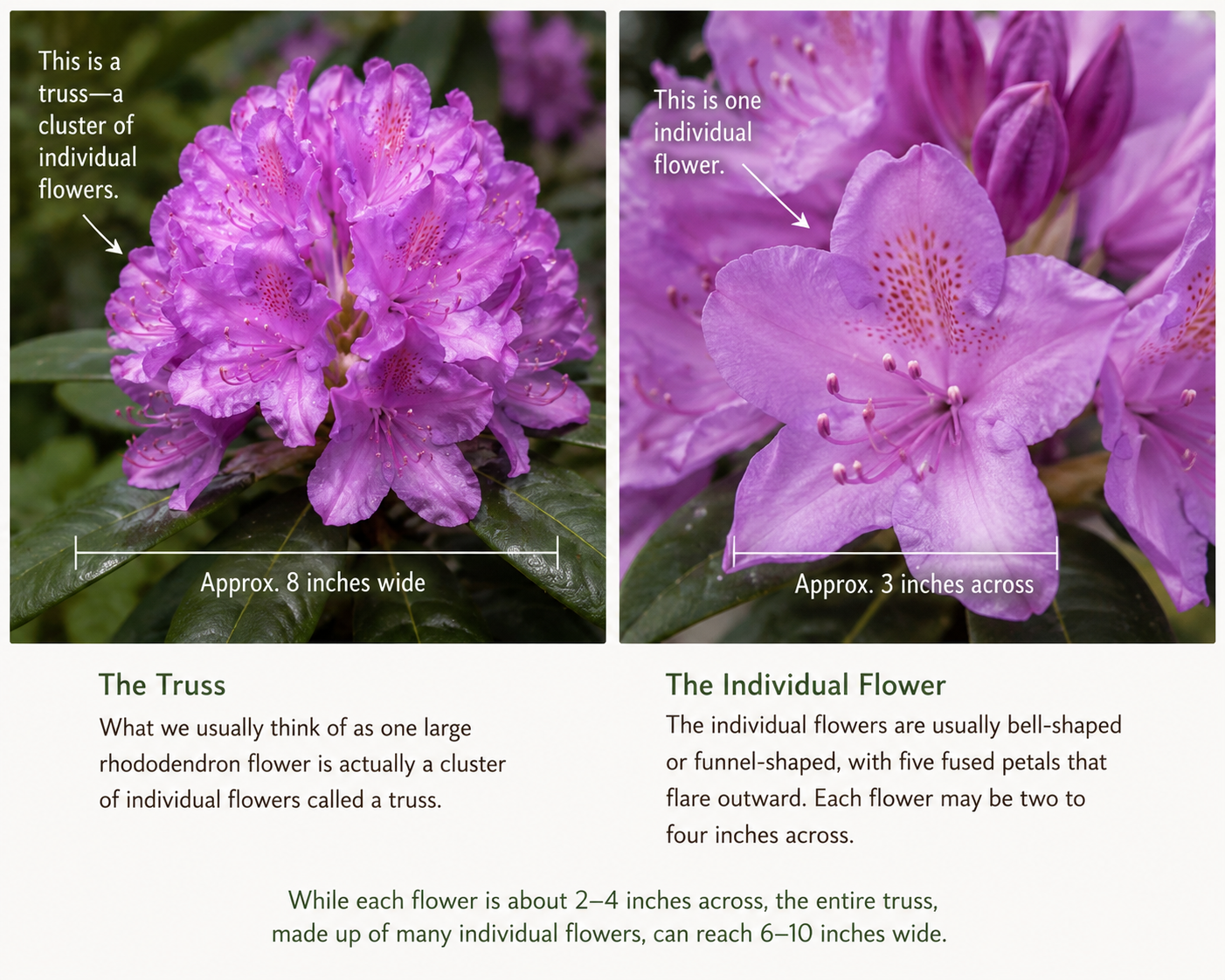
What we usually think of as one large rhododendron flower is actually a cluster of individual flowers called a truss.
The individual flowers are usually bell-shaped or funnel-shaped, with five fused petals that flare outward. Each flower may be two to four inches across, while the entire flower truss can reach six to ten inches wide.
The petals often have gently ruffled or wavy edges with a soft, almost satiny appearance. Rhododendrons come in an incredible range of colors, including white, cream, pink, lavender, purple, magenta, red, peach, and yellow. Many varieties also have contrasting spots, speckles, or blotches inside the throat of the flower.
Long stamens extend from the center of each bloom, giving the flowers their delicate and graceful appearance.
Most commonly grown rhododendrons have little or no fragrance, although a few species and hybrids are pleasantly scented.
In western Washington, many rhododendrons bloom from April through June, depending on the variety, location, and spring weather.
Unfortunately, the bloom period is fairly short, and most rhododendrons flower only once each season. There are a few reblooming varieties that may produce a second, lighter flush of flowers later in the year.
Deadheading Rhododendrons and Shaping the Plant
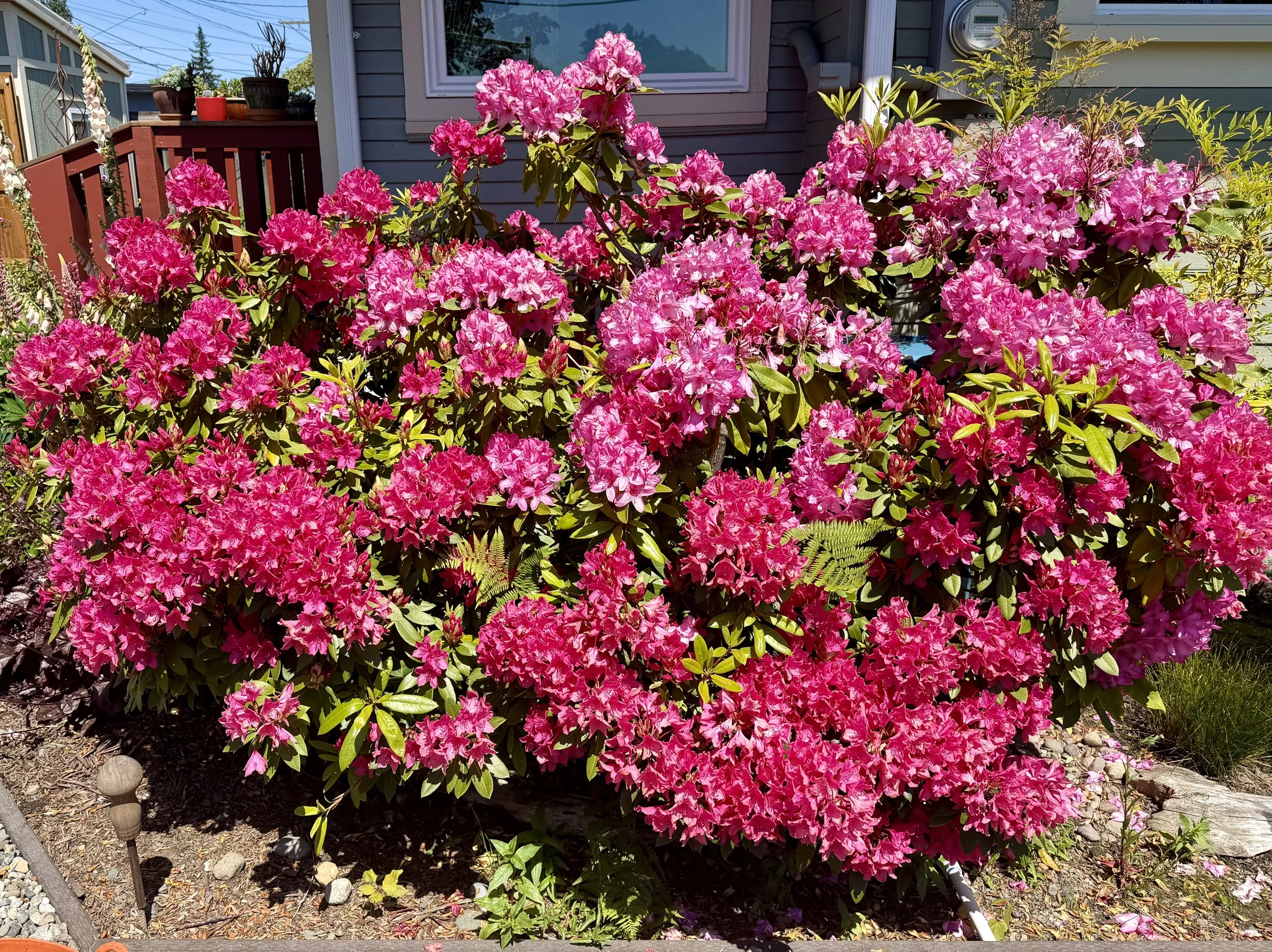
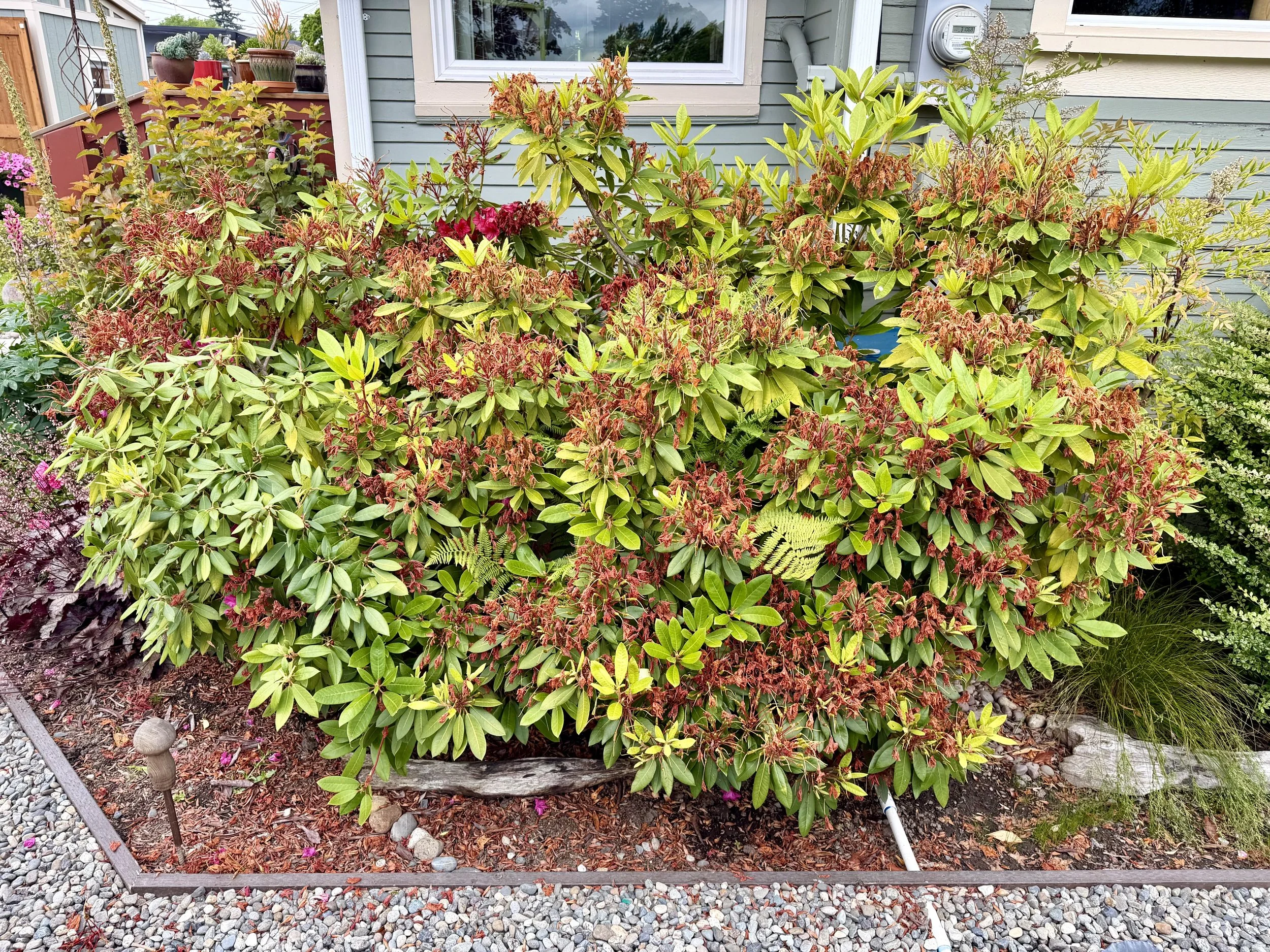
One yearly task I recommend is deadheading the plants after they have finished blooming.
Once the flowers fade and dry, the old trusses can remain attached to the plant for months and sometimes into the following year. Removing them makes the plant look cleaner and prevents it from putting energy into producing seeds.
I like to wear disposable gloves when deadheading. They provide a better grip and make it easier to remove the sticky flower trusses.
Hold the faded truss between two fingers, then gently twist and bend it to the side. It should pop off fairly easily.
Be careful not to damage the new growth directly below the old flower cluster. Just above the first set of full-sized leaves, you may see one or two smaller leaves or several new growth buds. The old truss should break off just above these new buds.
Sometimes the new growth is difficult to see. Other times, the new stems may already be one to six inches long by the time you deadhead. This depends on the rhododendron variety and when you get around to doing the job.
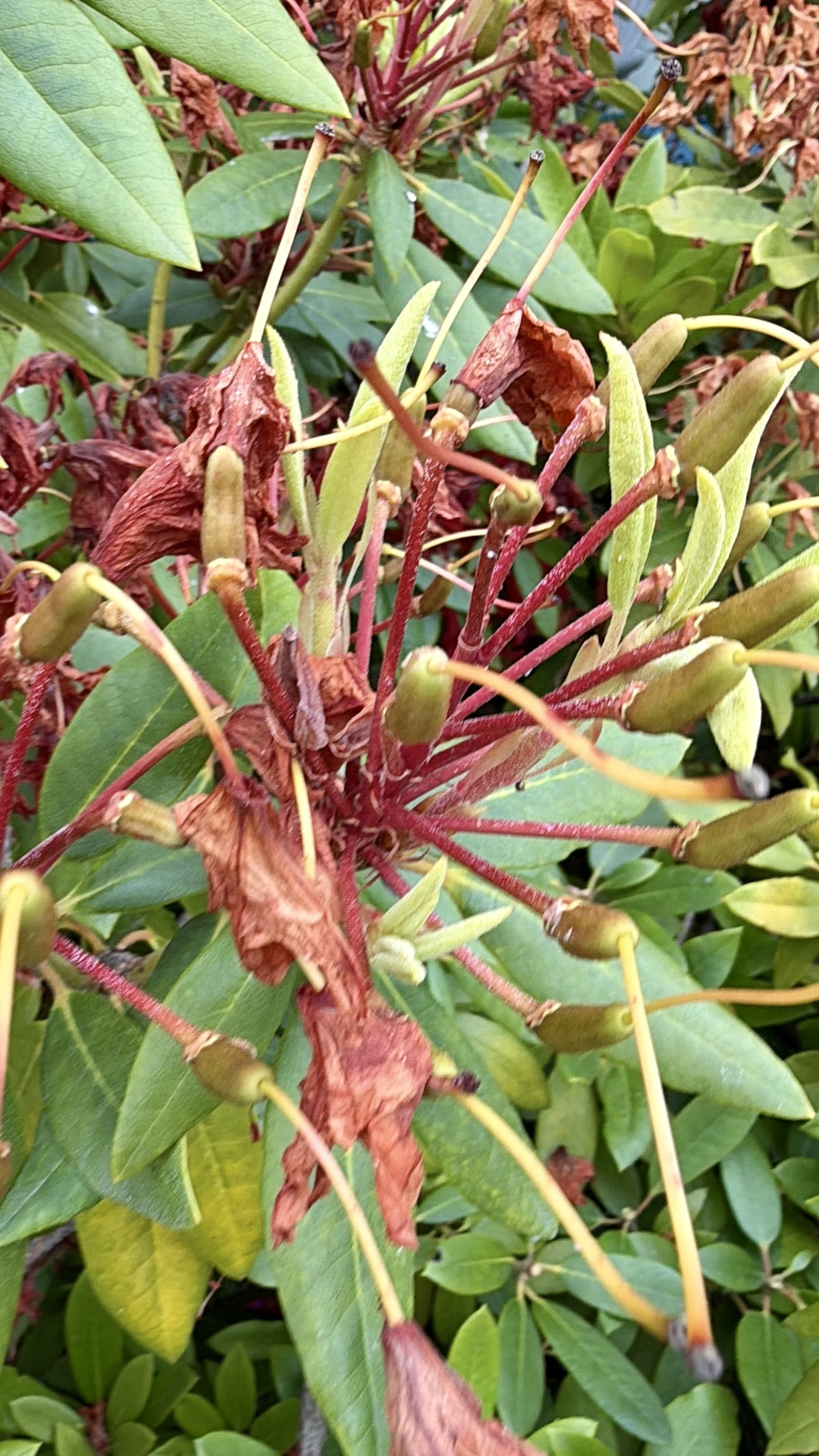
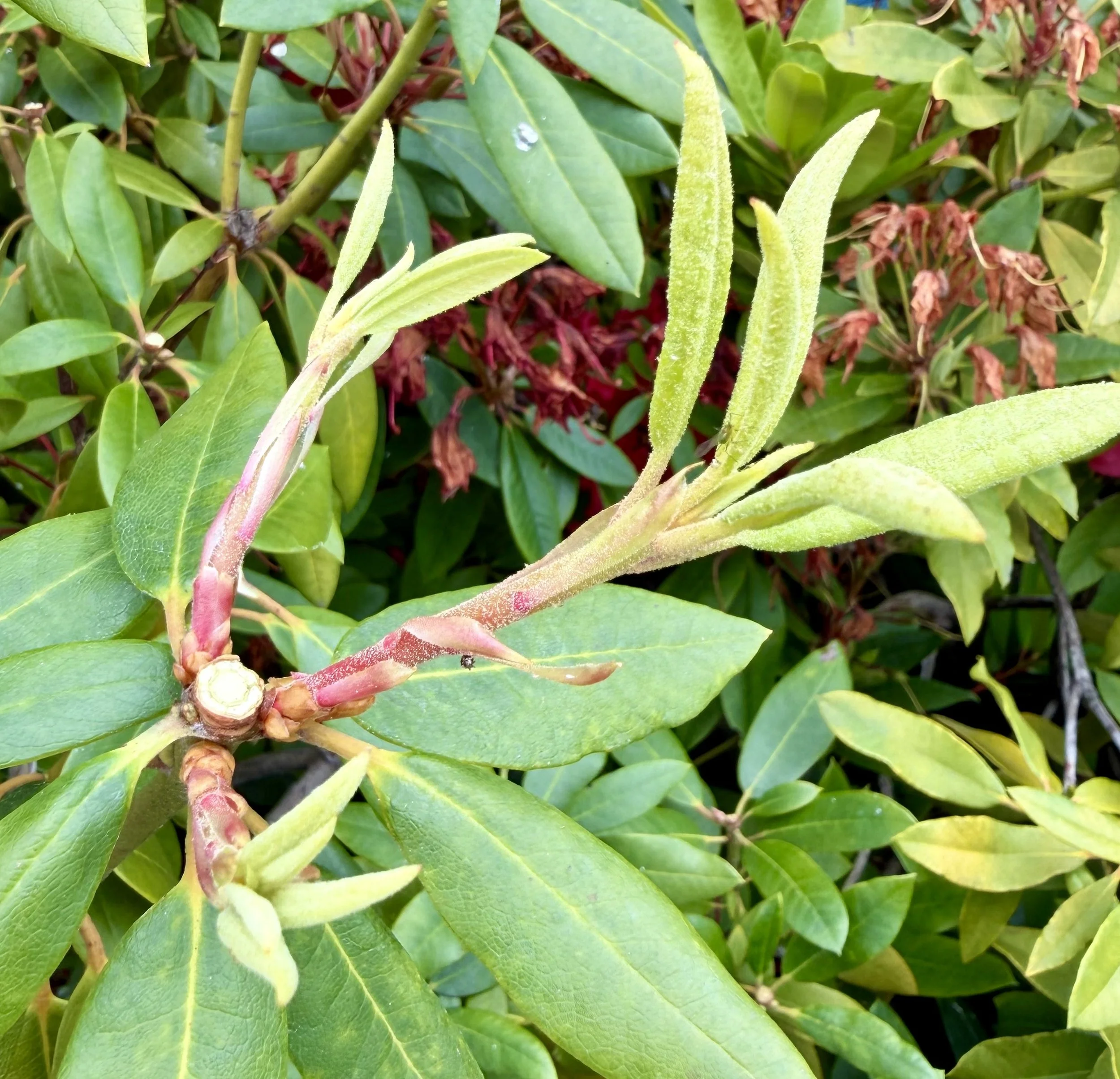
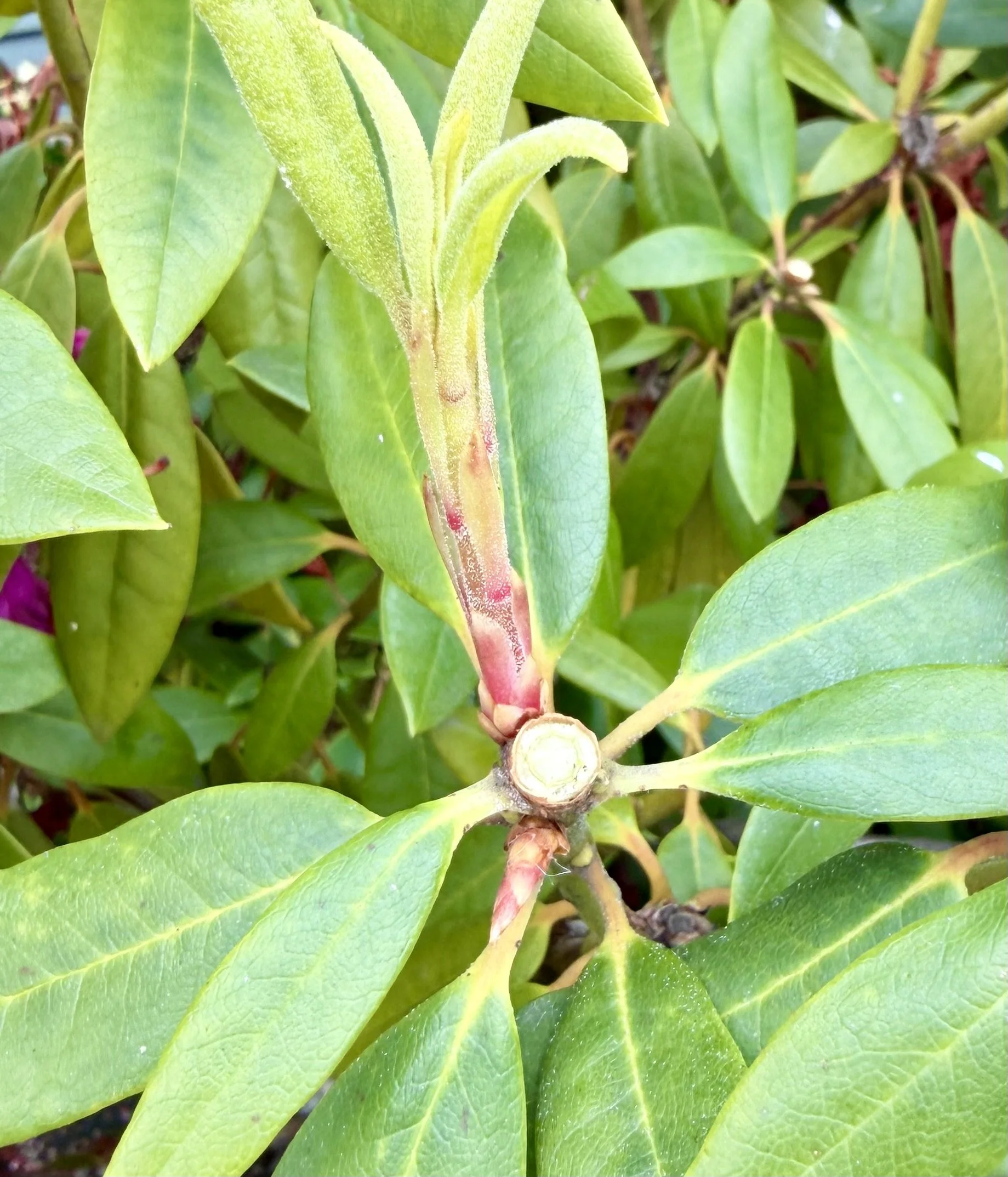
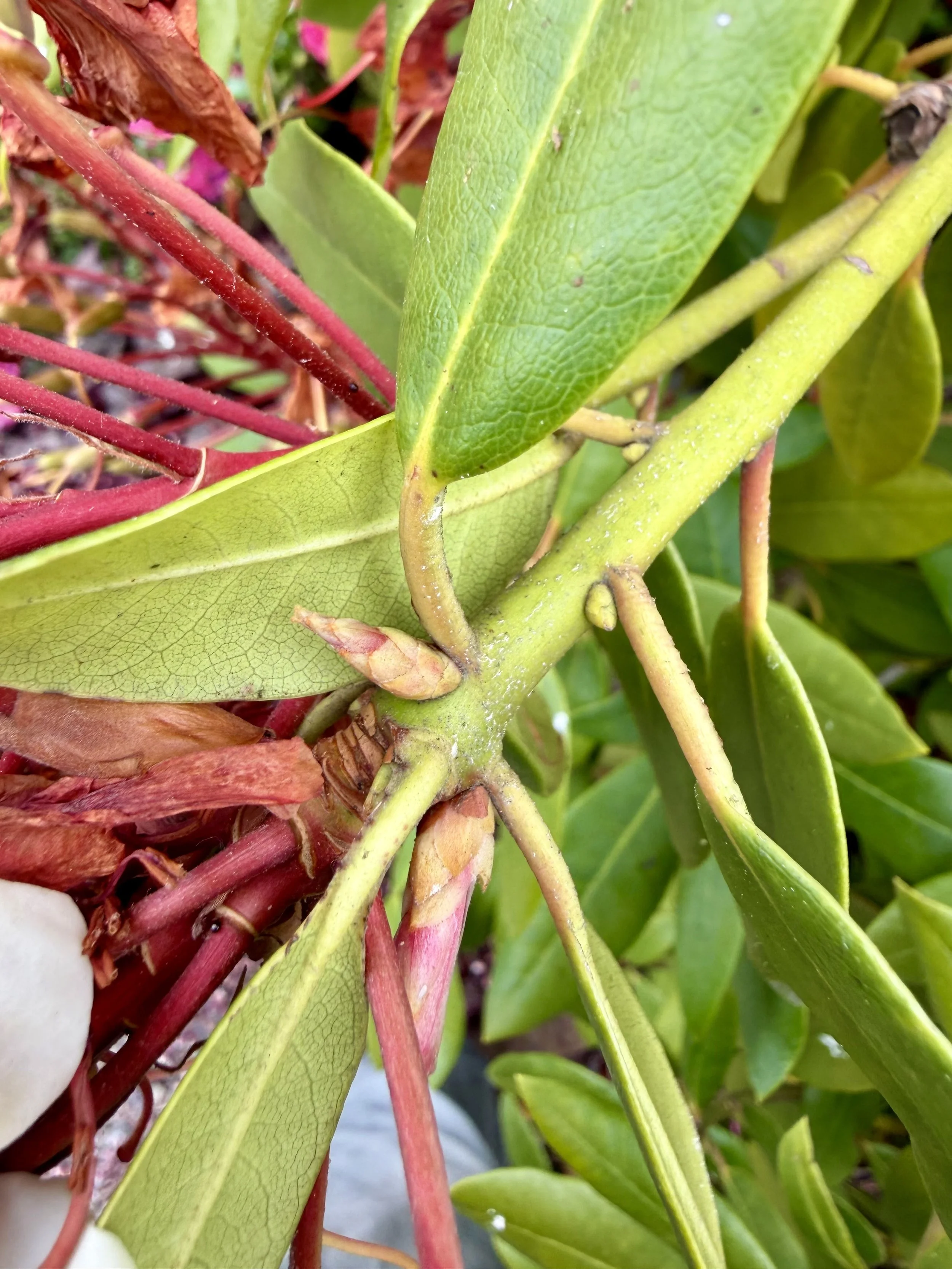
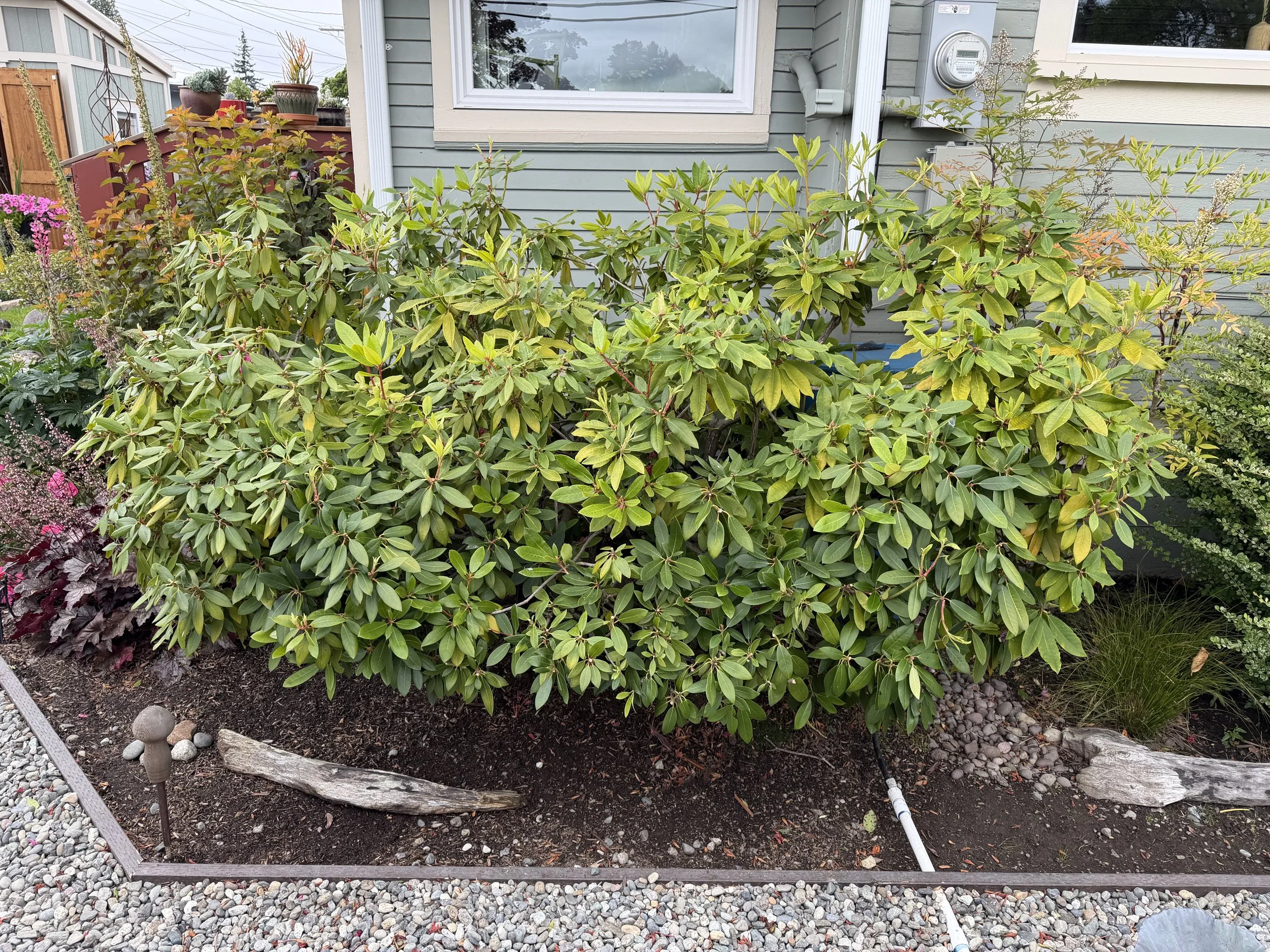
The new growth below the old flower truss will help determine the future shape of the plant.
If there is only one new stem, it will usually encourage the branch to grow taller. If several new stems develop, they will create a fuller and bushier plant.
You can use this new growth to help shape your rhododendron. Leave several stems when you want the plant to fill out. If you want more height and less bulk, you can carefully pinch off one or more of the extra shoots.
Do not remove too much growth at one time. A little selective pinching each year is usually enough to guide the plant into the shape you want.
Fertilizing Rhododendrons
Avoid fertilizers that are high in nitrogen. Too much nitrogen can produce a lot of green foliage at the expense of flowers.
Use a fertilizer made for rhododendrons, azaleas, and other acid-loving plants. A slow-release fertilizer can be applied in early spring, with a lighter feeding after flowering if the plant needs it.
Compost or compost tea may also be used, but avoid overfertilizing. Rhododendrons have shallow roots and can be damaged by excessive fertilizer.
Once that is done, your rhododendrons should require very little additional care. Keep an eye on them during dry weather and provide an occasional deep watering when needed. After that, you can enjoy the foliage for the rest of the year and wait for another beautiful display of flowers next spring.
See Rhododendrons at Meerkerk Gardens
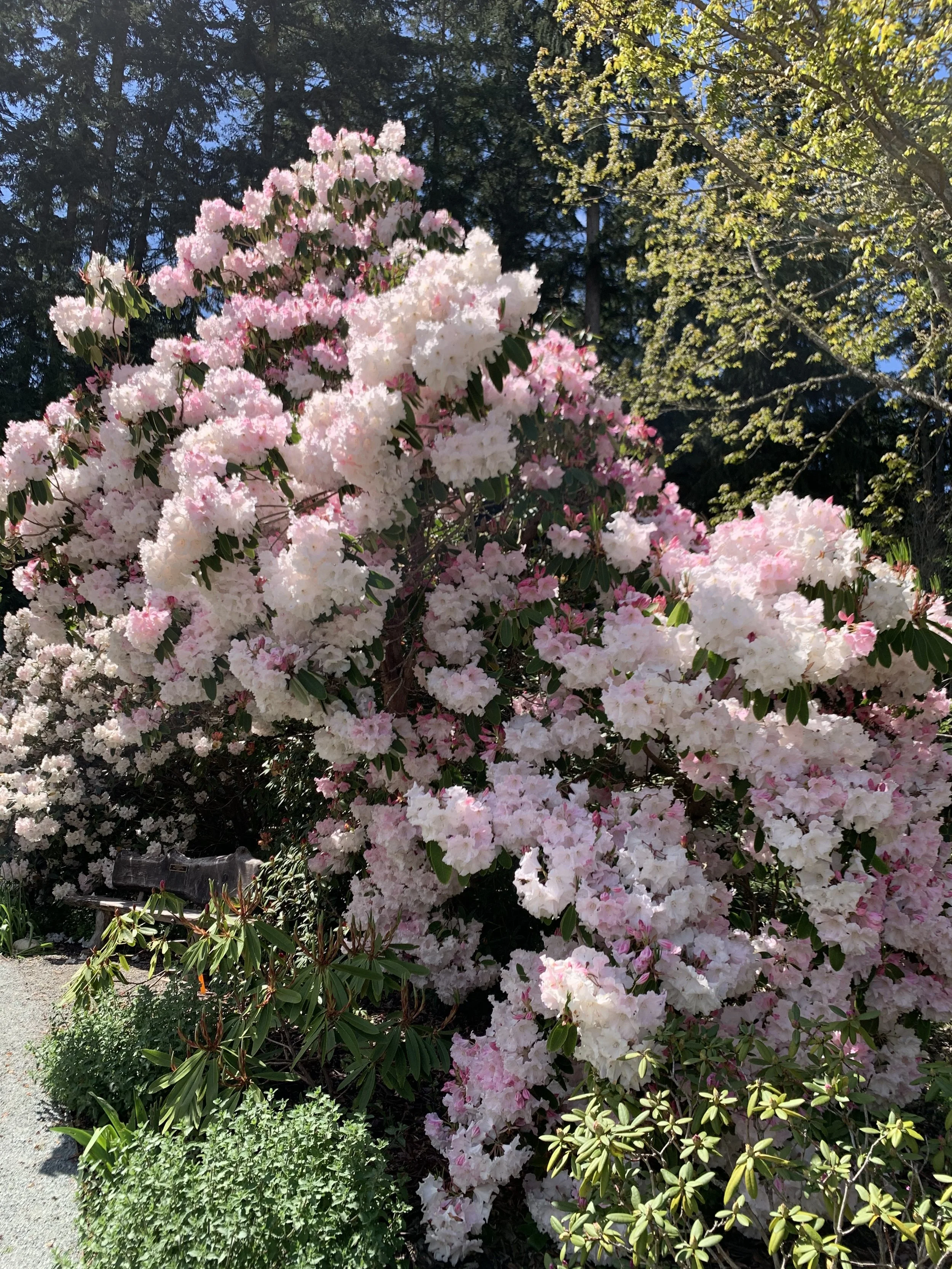
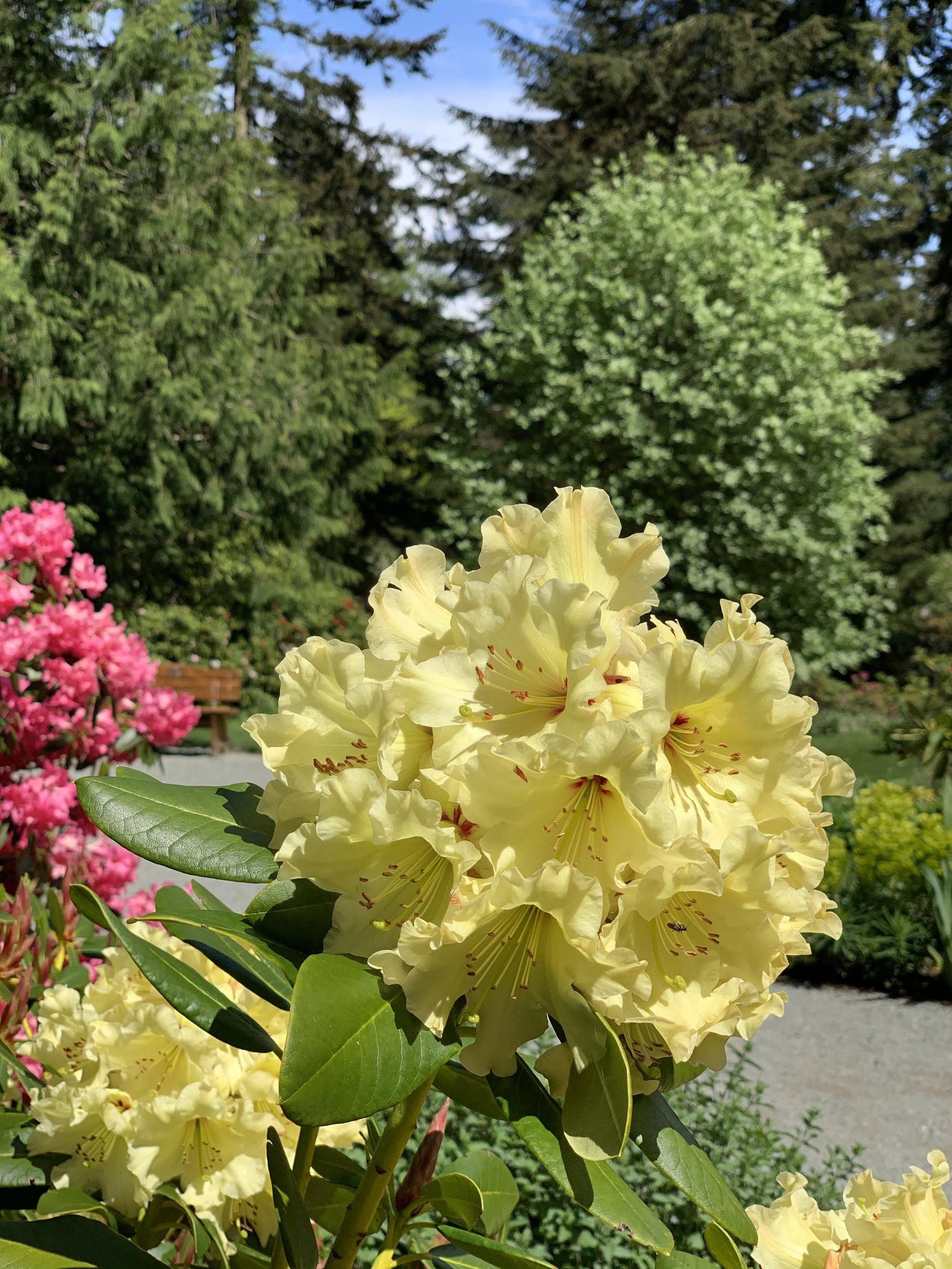
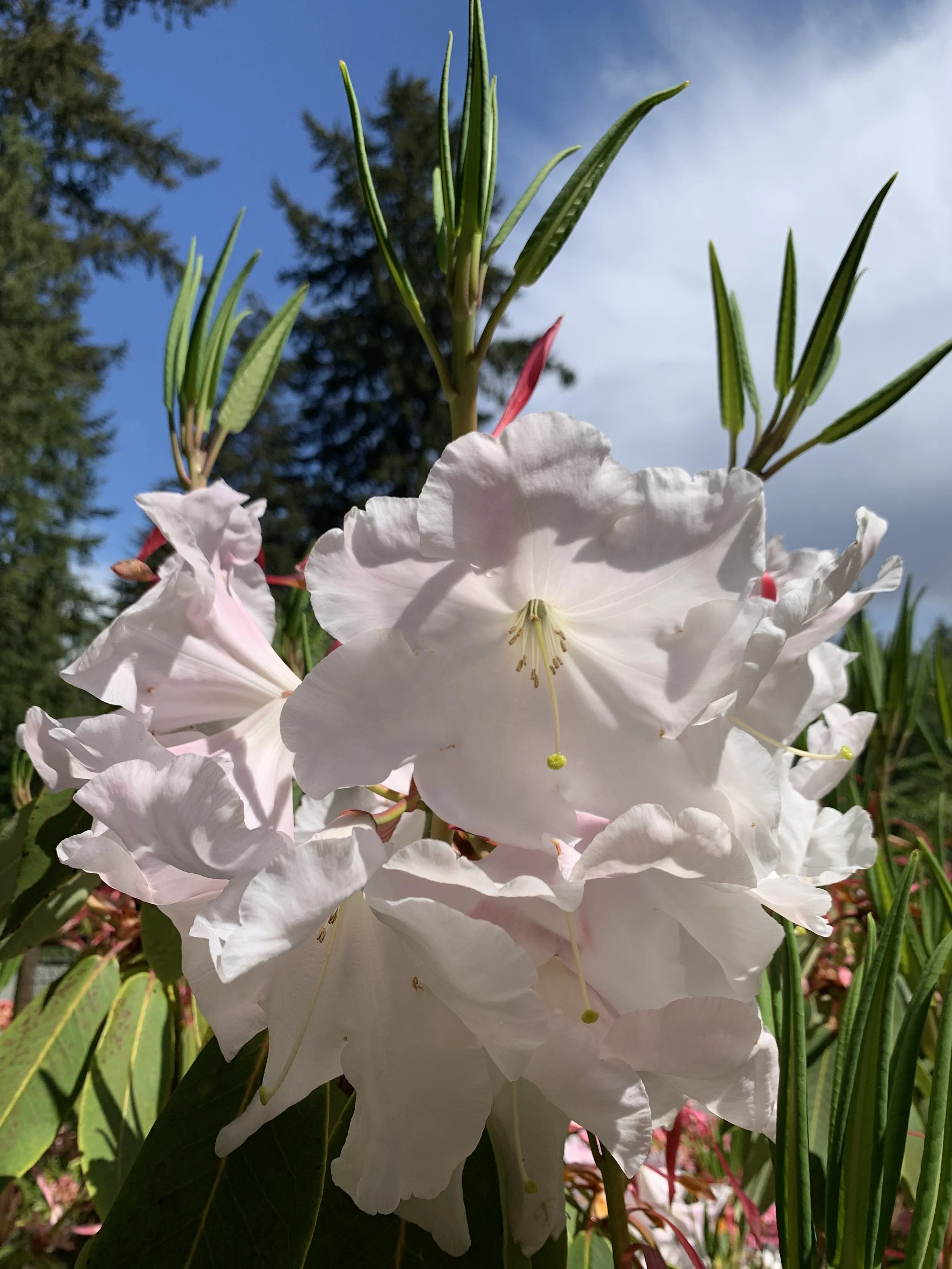
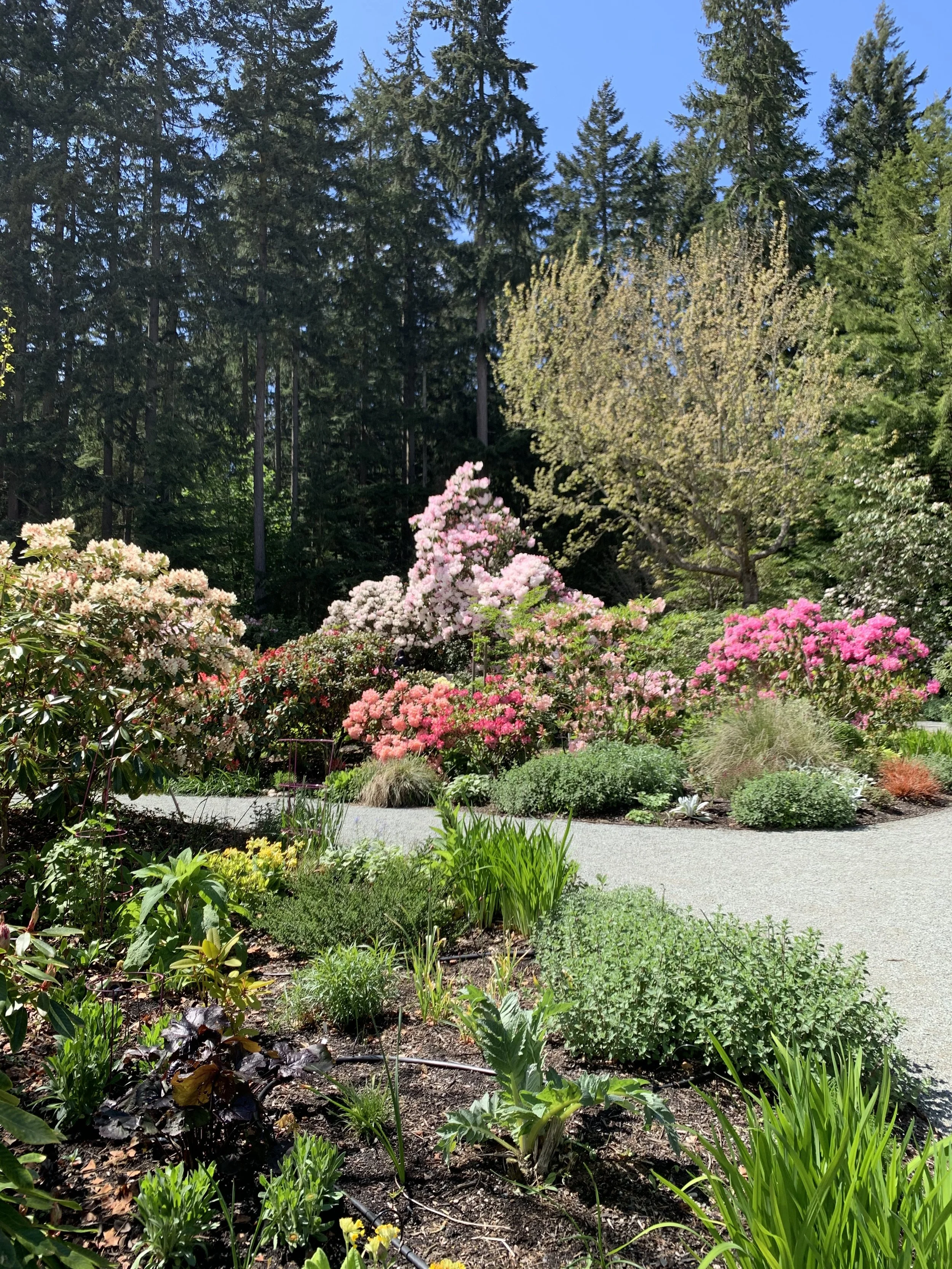
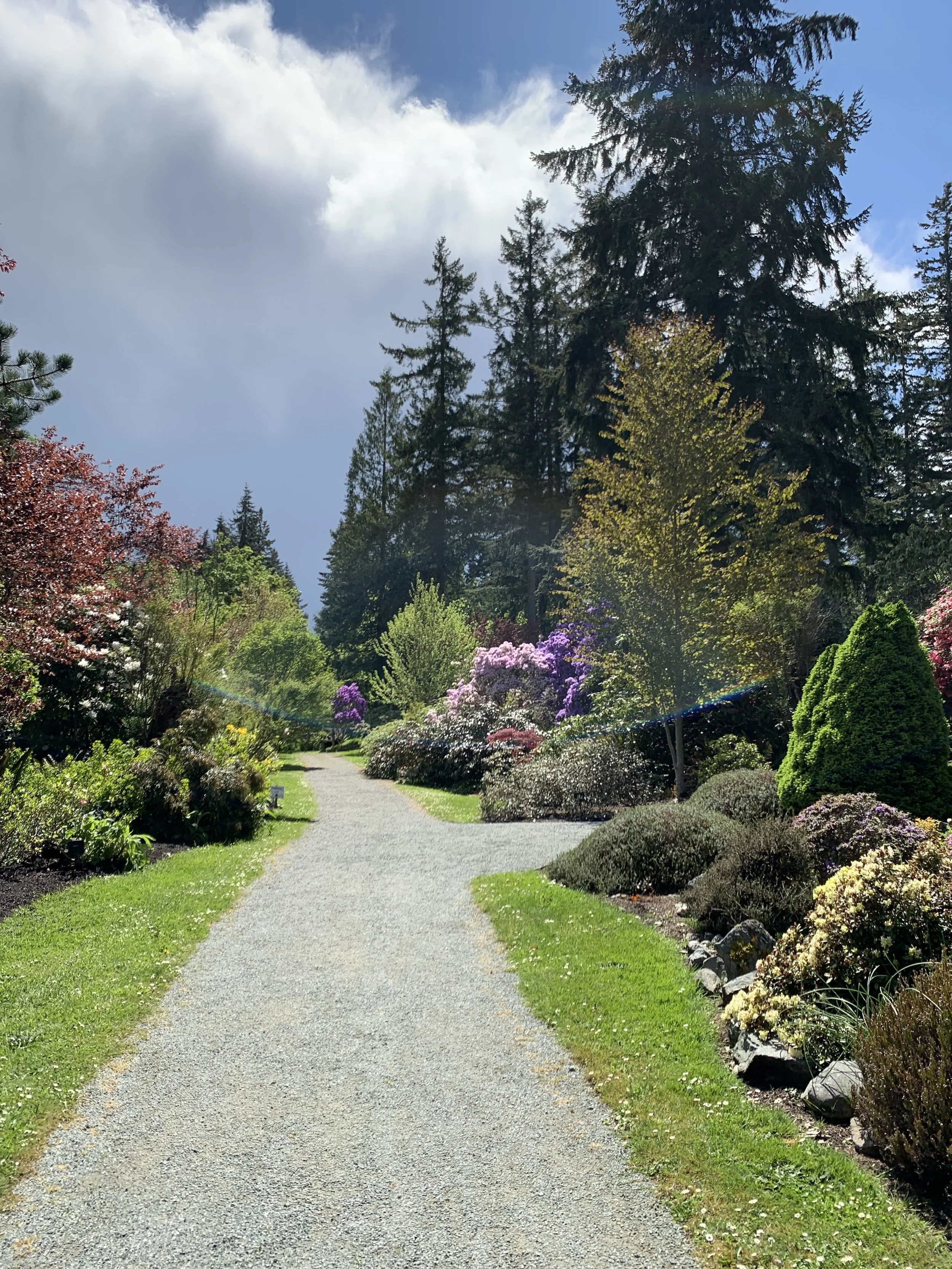
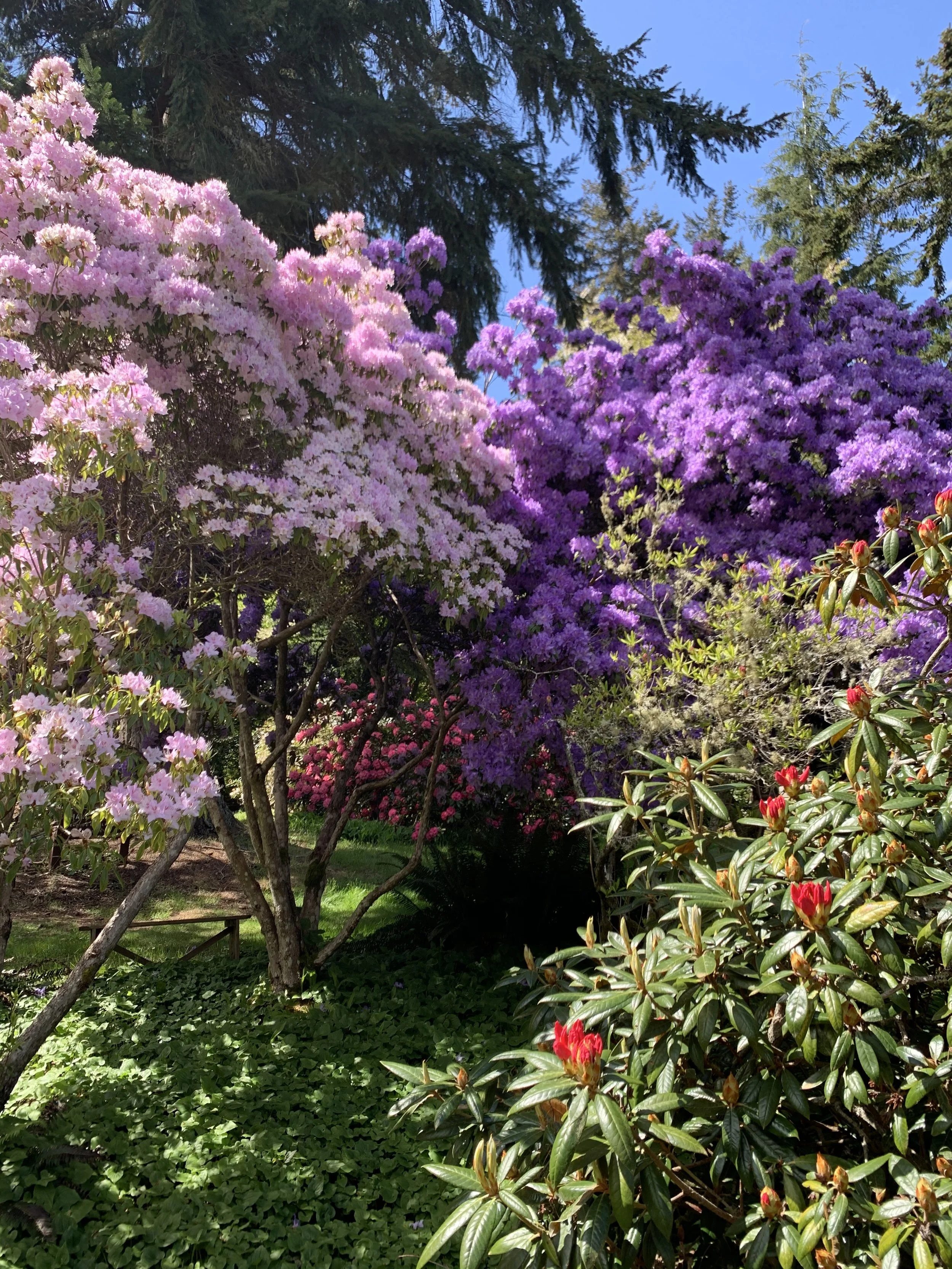
The photos above were taken at Meerkerk Gardens, Whidbey Island’s premier public rhododendron garden. The gardens are open daily from 9:00 a.m. to 5:00 p.m. (March through October) and 9:00 a.m. to 4:00 p.m. (November through February), except during extreme weather events.
If you’re planning a visit to Whidbey Island, try to go during the peak rhododendron bloom season, typically from March through June. It’s an unforgettable display of color and one of the best places in the Pacific Northwest to experience these spectacular shrubs at their finest.
With the right location, proper soil, consistent watering, and a little seasonal care, rhododendrons can reward you with spectacular blooms for decades.