
Petunias Then and Now: Exploring Their Colors, Forms, and Varieties
Petunias are among the most popular annuals for flower beds, pots, window boxes, hanging baskets, and mixed containers. Their abundant trumpet-shaped flowers provide color from late spring until frost, and today’s varieties offer an extraordinary selection of colors, patterns, sizes, and growth habits.
Where Petunias Come From
True petunias are native to South America, particularly Argentina, Brazil, Paraguay, Uruguay, and Bolivia. Wild species grow naturally in grasslands, rocky areas, and other open habitats. Most garden petunias are hybrids descended primarily from the fragrant, white-flowered Petunia axillaris and the purple-flowered Petunia integrifolia.
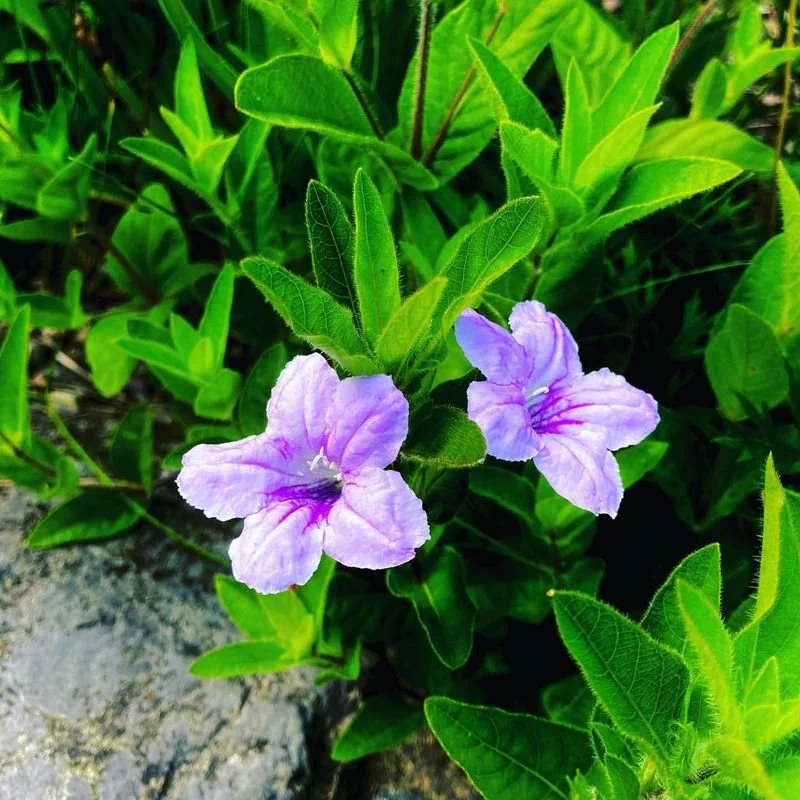
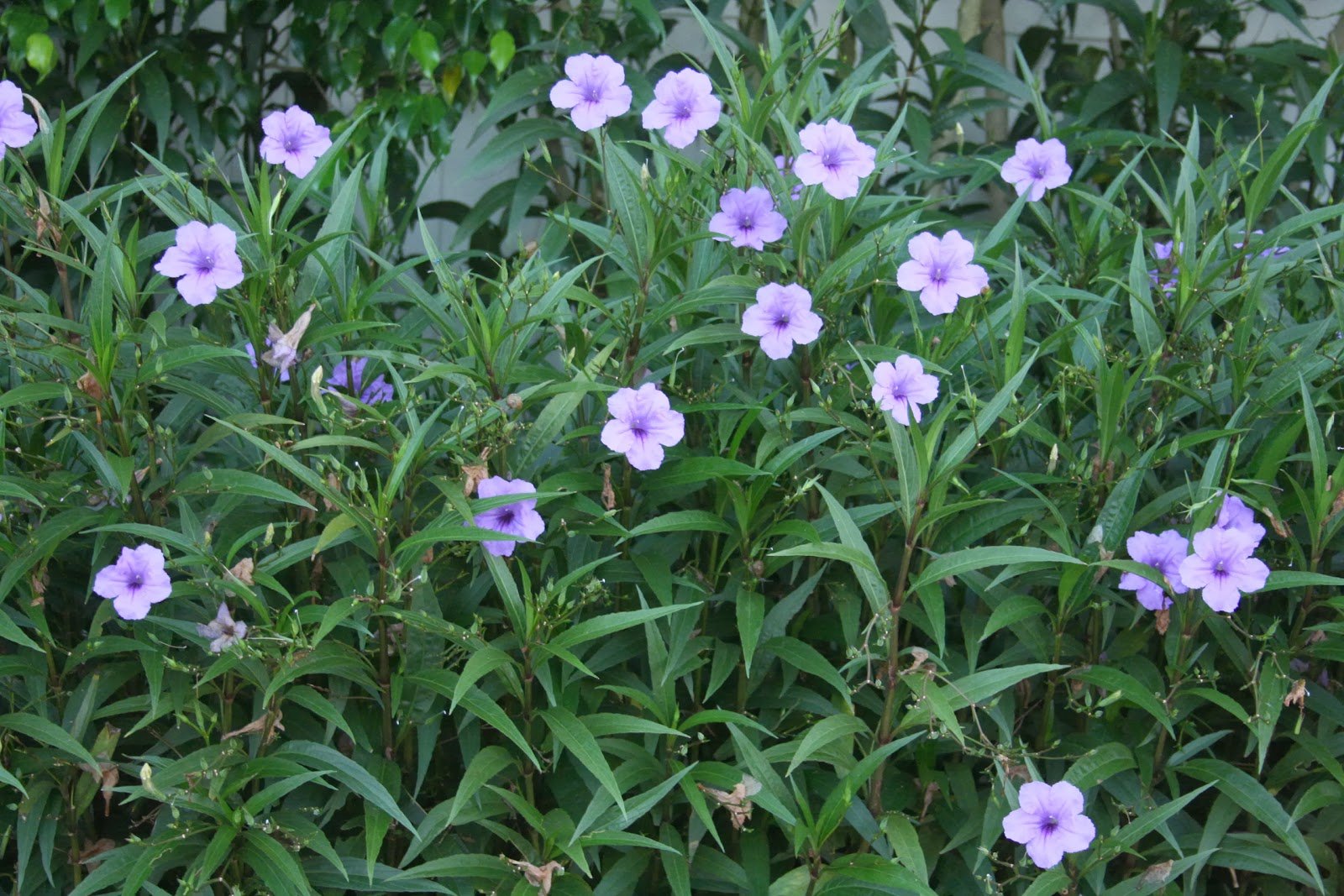
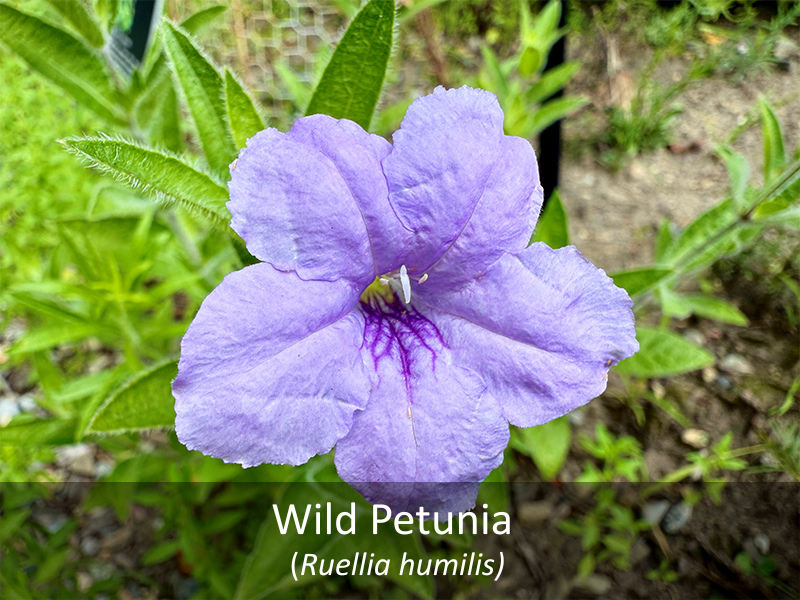
A different plant commonly called “wild petunia” grows in parts of North America. These plants belong to the genus Ruellia and are not true petunias, despite the resemblance of their flowers. They are native perennials that often form low-growing clumps and produce lavender or light-purple tubular flowers during the summer. Their hairy leaves and stems help them tolerate hot, dry conditions.
Old-Fashioned and Modern Petunias
“Old-fashioned petunias” generally refers to heirloom or traditional seed-grown varieties. These plants often have smaller, simpler flowers, a loose growth habit, and a wonderfully sweet fragrance that becomes especially noticeable in the evening. Many old-fashioned petunias self-seed, although the resulting plants may produce flowers with slightly different colors and forms.
Modern petunias are hybrids bred for stronger and more predictable garden performance. They generally produce more flowers, offer brighter colors and elaborate patterns, and tolerate heat and rain better than many older varieties. Modern petunias are also available in a range of growth habits, from tidy, compact mounds to vigorous trailing plants that spill over the sides of containers and hanging baskets.
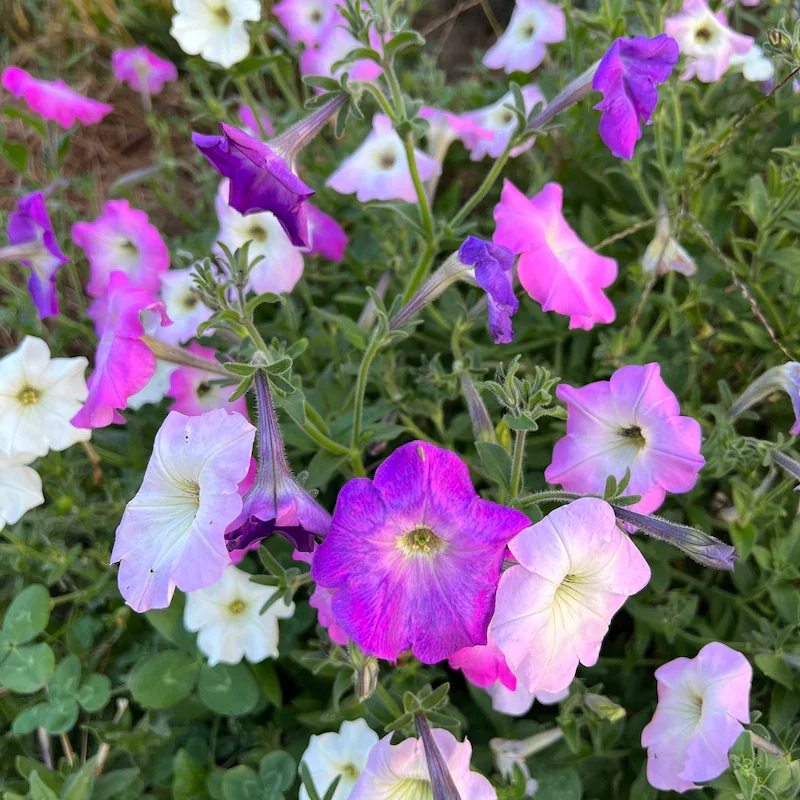
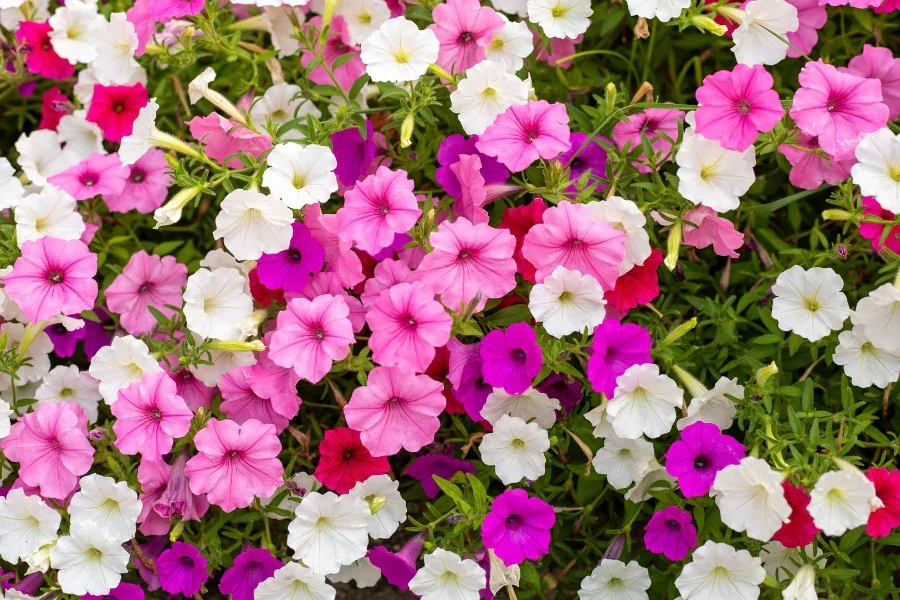
Each type has its appeal. Old-fashioned petunias offer fragrance, charm, and natural variation, while modern hybrids provide heavier flowering, greater reliability, and easier care. However, “old-fashioned” is not an official botanical classification. Nurseries may use the term for heirloom varieties, fragrant selections, or plants that simply resemble petunias grown in earlier generations.
Advantages of Modern Petunias
Modern petunias bloom heavily and continuously from late spring until frost. Many recover quickly after rain and continue flowering through summer heat. Newer self-cleaning varieties naturally shed their faded flowers, reducing or eliminating the need for deadheading.
Gardeners can choose compact, mounding plants for pots and flower beds or vigorous spreading and trailing varieties for landscapes, window boxes, and hanging baskets. Modern hybrids also tend to grow uniformly and perform more predictably than older seed-grown plants. Many newer cultivars have been bred for improved resistance to diseases and difficult growing conditions.
Perhaps their greatest advantage is variety. Modern petunias are available in an astonishing collection of colors and patterns, including stripes, stars, speckles, contrasting edges, prominent veins, and multicolored blends. The principal trade-off is fragrance: some modern varieties have little or no scent compared with old-fashioned petunias.
Major Petunia Companies in the United States
Two of the most prominent names in the American petunia market are Ball Horticultural Company and Proven Winners North America.
Proven Winners North America is a U.S.-based plant brand and producer network known for the Supertunia collection. Its offerings include classic Supertunias, vigorous Supertunia Vistas, and smaller-flowered Supertunia Mini Vistas. These petunias are widely grown in containers and landscapes because of their long flowering season, self-cleaning blooms, and dependable summer performance.
Ball Horticultural Company is based in Illinois and is the parent company of PanAmerican Seed and Ball FloraPlant. Its well-known modern petunia collections include Wave, Easy Wave, Tidal Wave, Shock Wave, and SureShot. These varieties have become popular for their vigorous growth, abundant flowers, and strong landscape performance.
Petunia Colors and Patterns
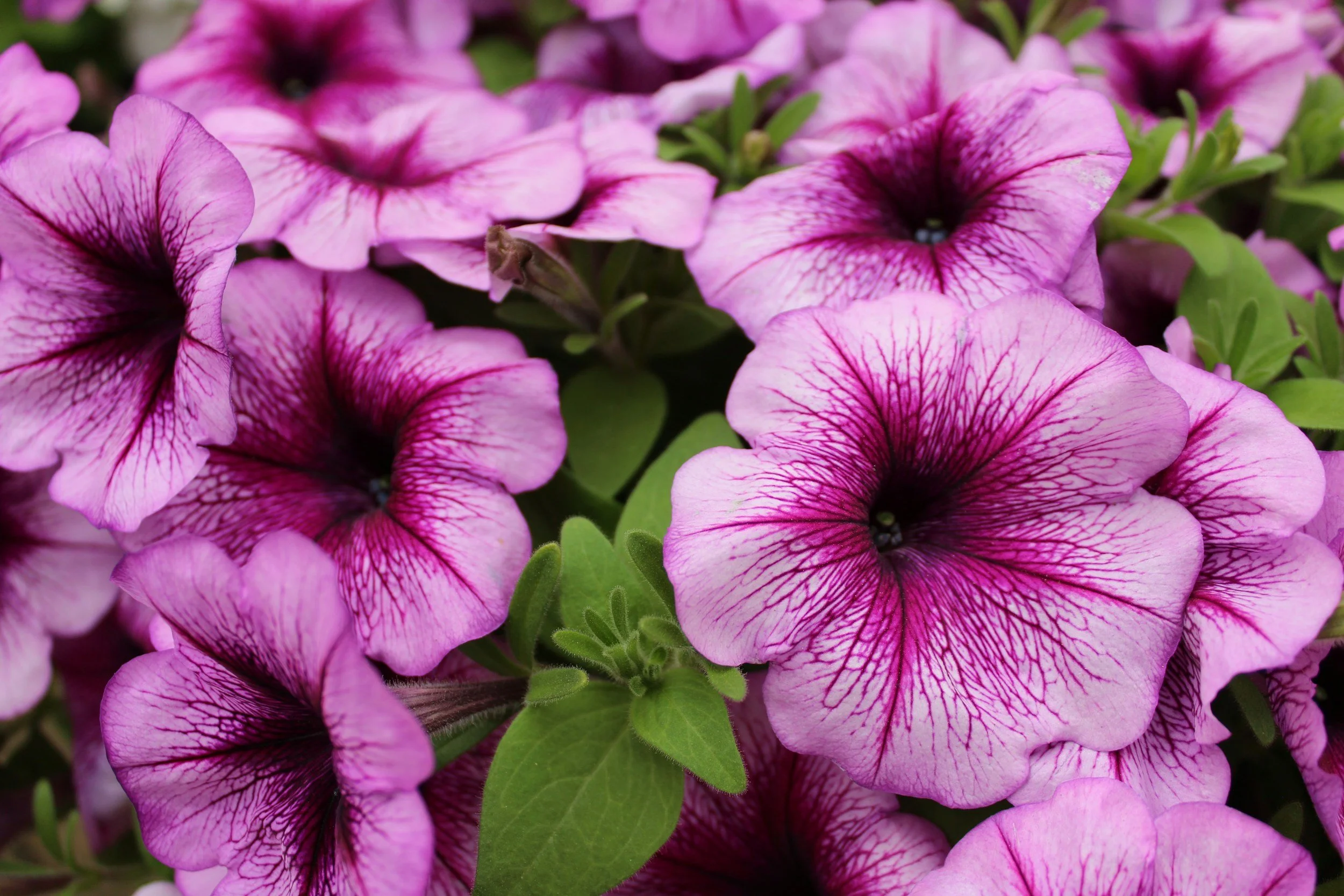
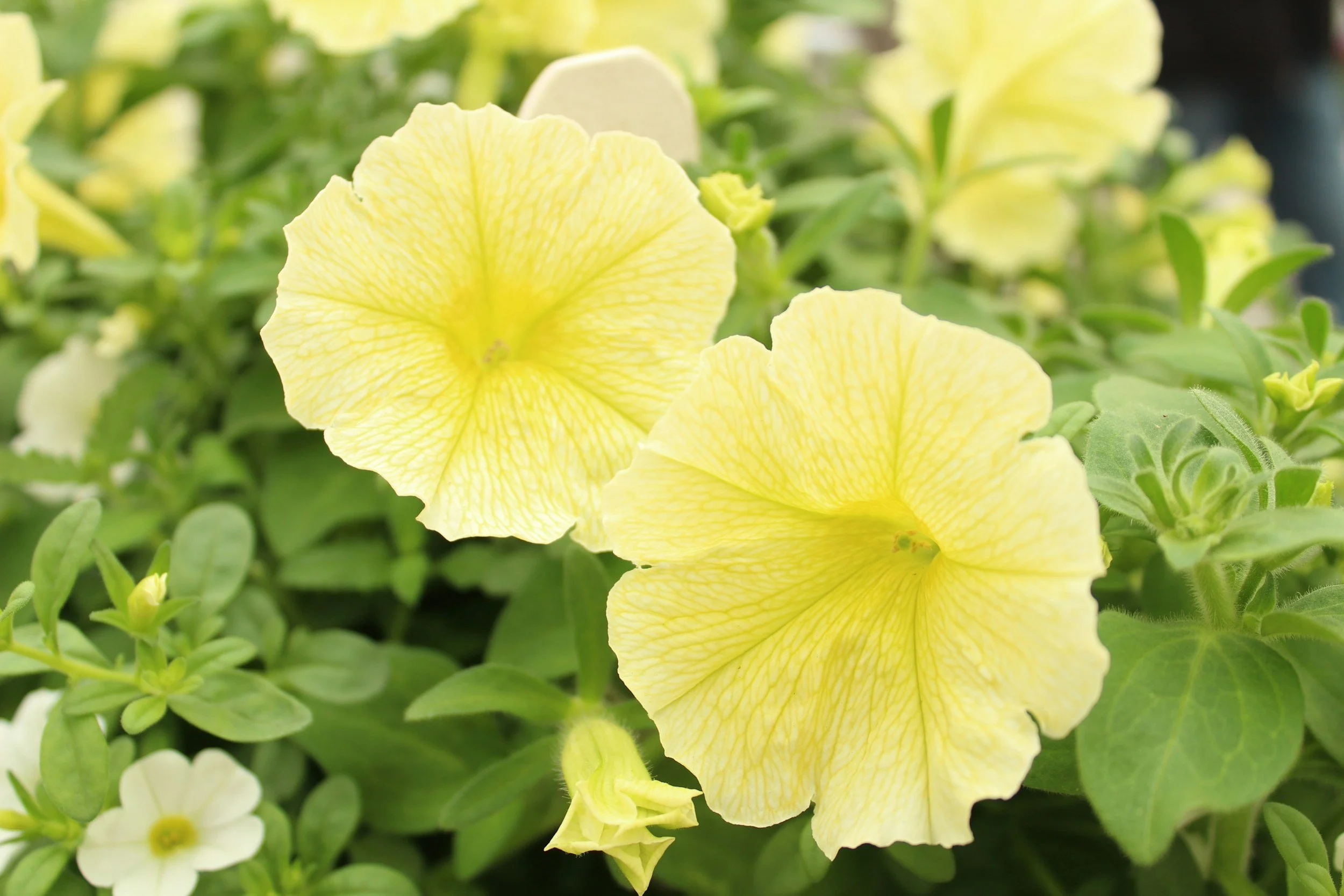
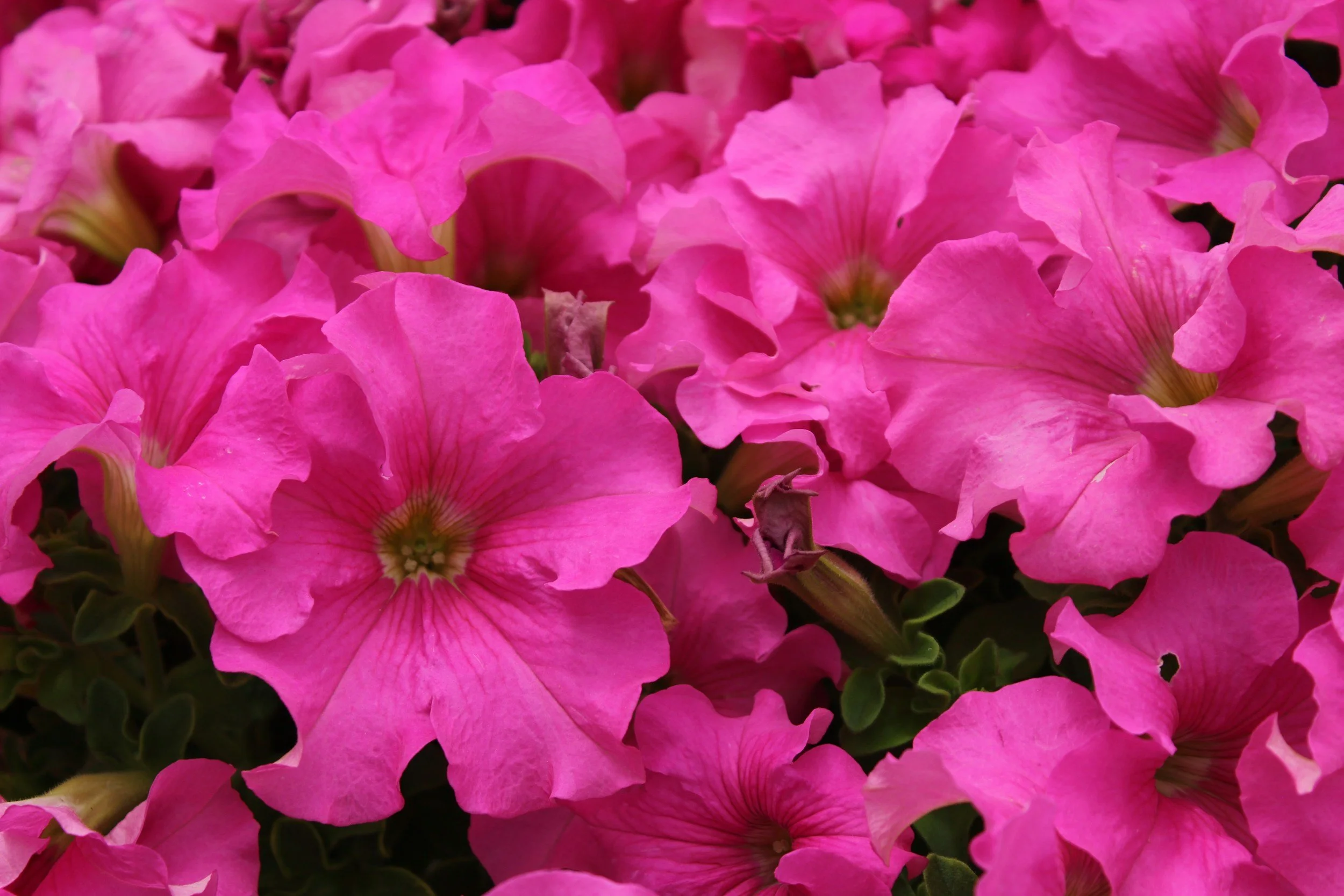
Petunias come in an exceptionally broad range of colors, including white, cream, pale yellow, peach, coral, salmon, pink, rose, red, burgundy, lavender, violet, purple, and blue-purple. Some varieties are such a deep purple or burgundy that they appear almost black.
The flowers may be a single solid color or display contrasting throats, dark veins, white borders, stripes, star-shaped markings, speckles, or softly blended shades. These patterns make modern petunias especially useful for creating dramatic containers and colorful garden combinations.
Despite this impressive selection, a few colors remain elusive. Petunias do not naturally produce a true, pure orange or bright golden yellow. Varieties described as orange are generally coral, salmon, peach, or orange-red, while yellow varieties are usually pale, creamy, or slightly greenish.
Petunias also lack a true sky blue. Flowers marketed as blue are usually lavender, violet, or blue-purple. Similarly, so-called black petunias are actually extremely dark shades of purple or burgundy. Green petunias are available, although their flowers tend to be pale lime rather than a deep leaf-green. Continued plant breeding and biotechnology may expand this color range in the future.
Petunia Flower Types
Single petunias have the familiar open, trumpet-shaped flower with one set of petals. Double petunias contain additional petals, giving their flowers a full, ruffled appearance. Some varieties also have fringed, wavy, or deeply ruffled petal edges.
Petunias are often grouped by flower size and blooming habit. Grandiflora petunias produce large, showy flowers, commonly measuring three to five inches across. Multiflora petunias carry smaller but more numerous flowers and generally withstand rainy weather better. Floribundas combine the relatively large flowers of grandifloras with the abundant flowering of multifloras. Milliflora petunias produce masses of miniature flowers, usually measuring about one to one and a half inches across.
Petunias also differ in overall plant form. Some grow upright, others develop into compact mounds, and spreading varieties form colorful groundcovers. Trailing petunias cascade over the edges of pots, window boxes, and hanging baskets, and they prefer part to full sun, and I’ve found that full sun gives you the best end result.
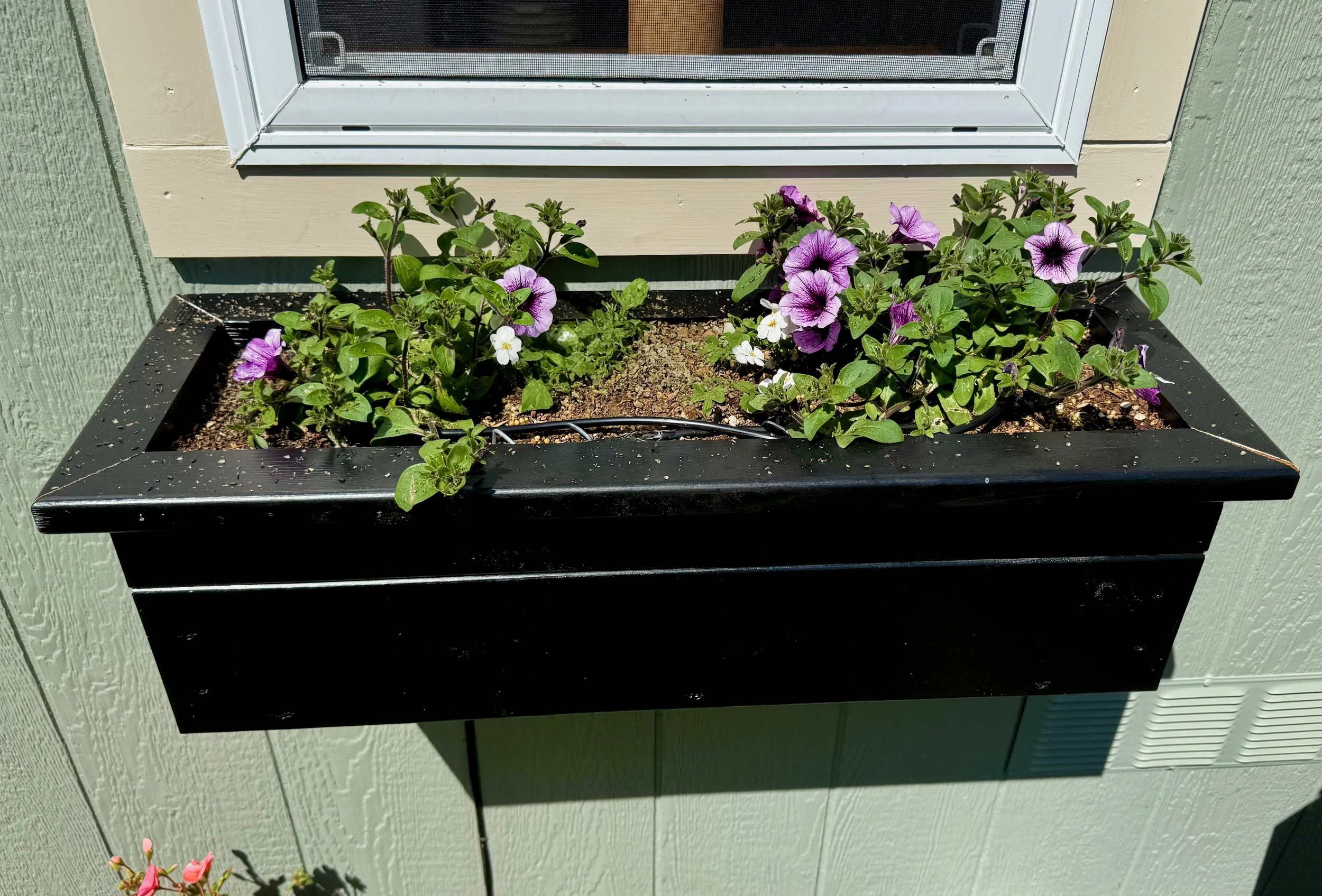
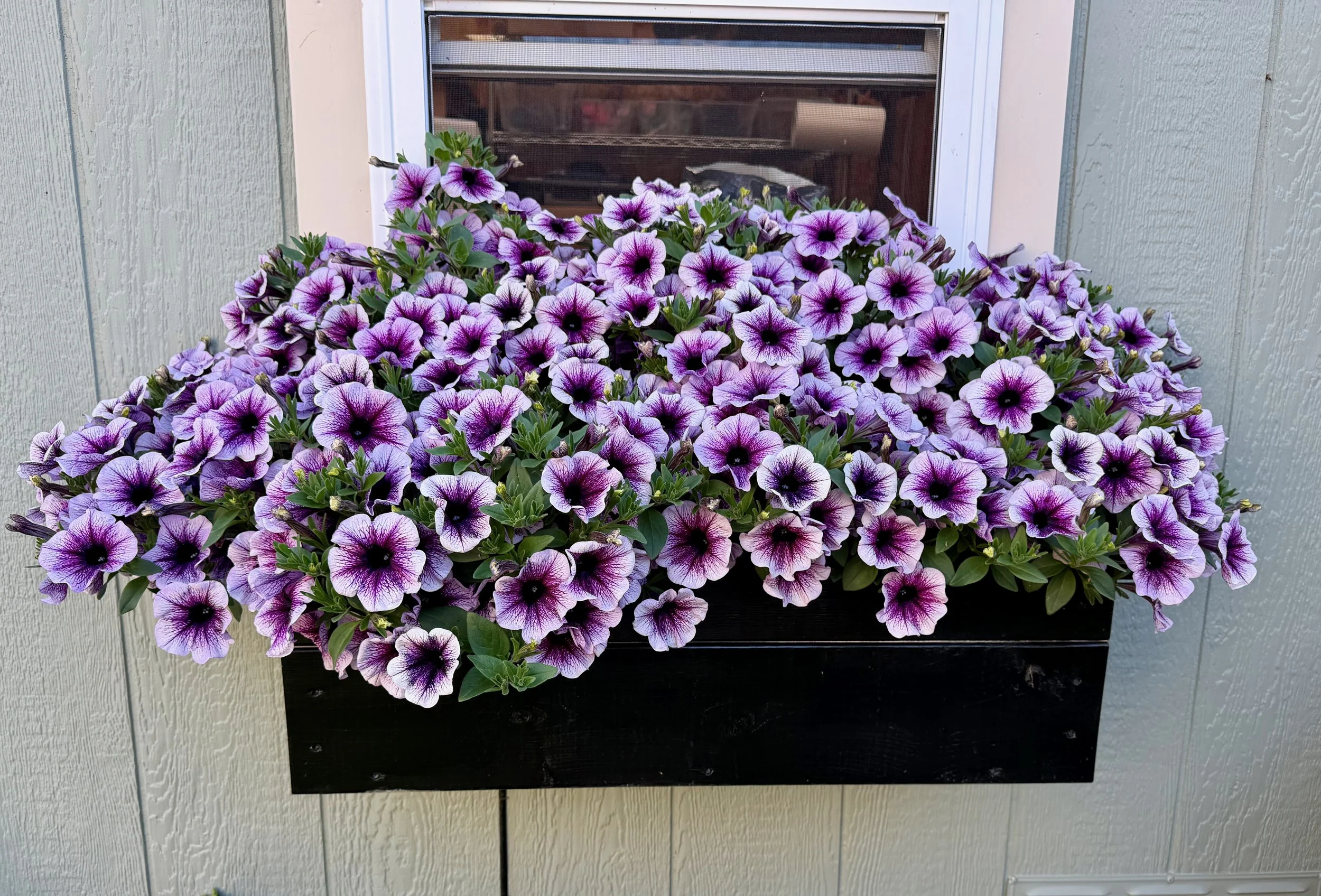
Growing Petunias in the Everett Area
Here in the Everett area, I usually buy petunias from the Proven Winners line. Our favorite place to purchase most of our annuals is Snohomish Garden Center, a locally owned, family-operated retail nursery and garden-supply store.
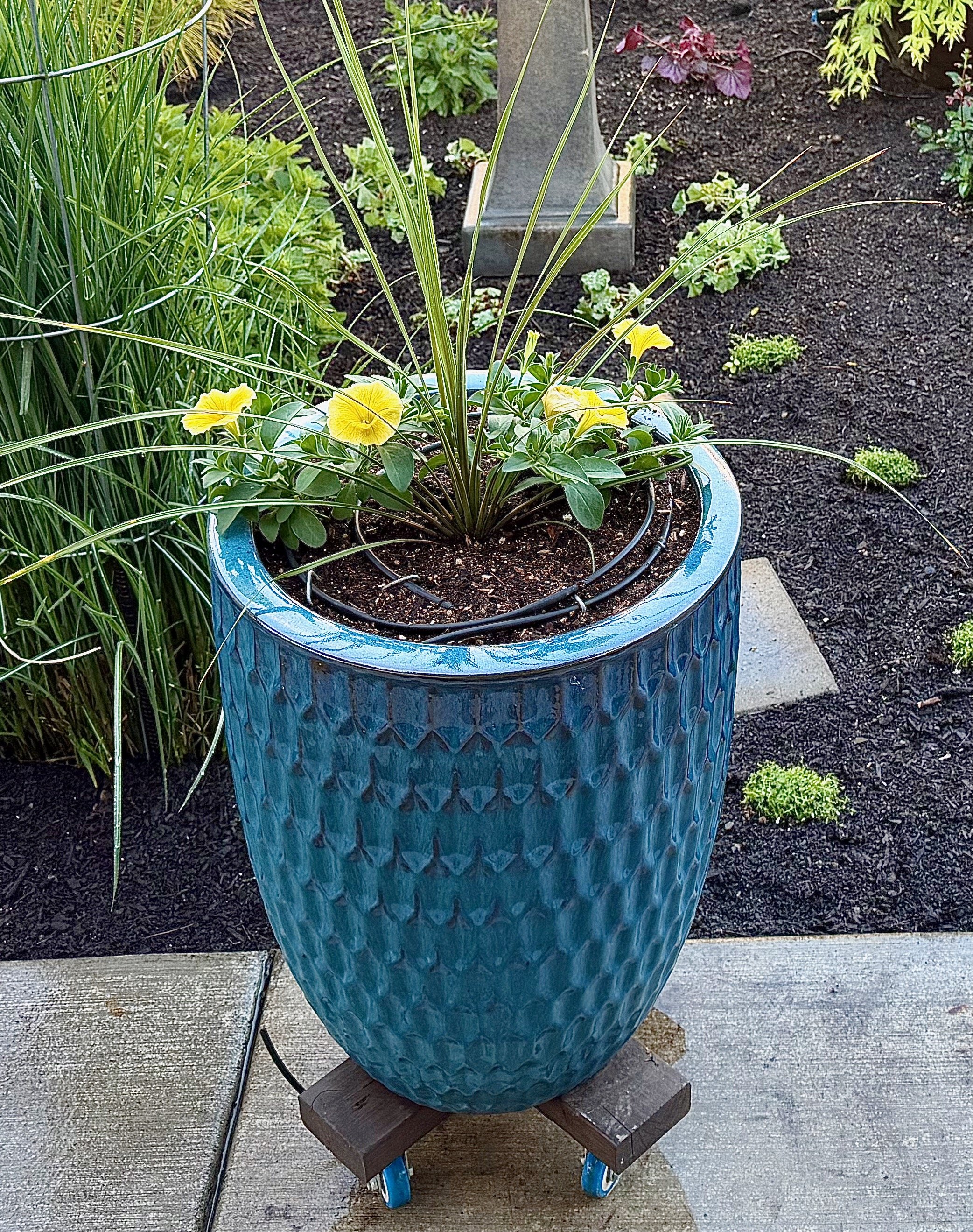
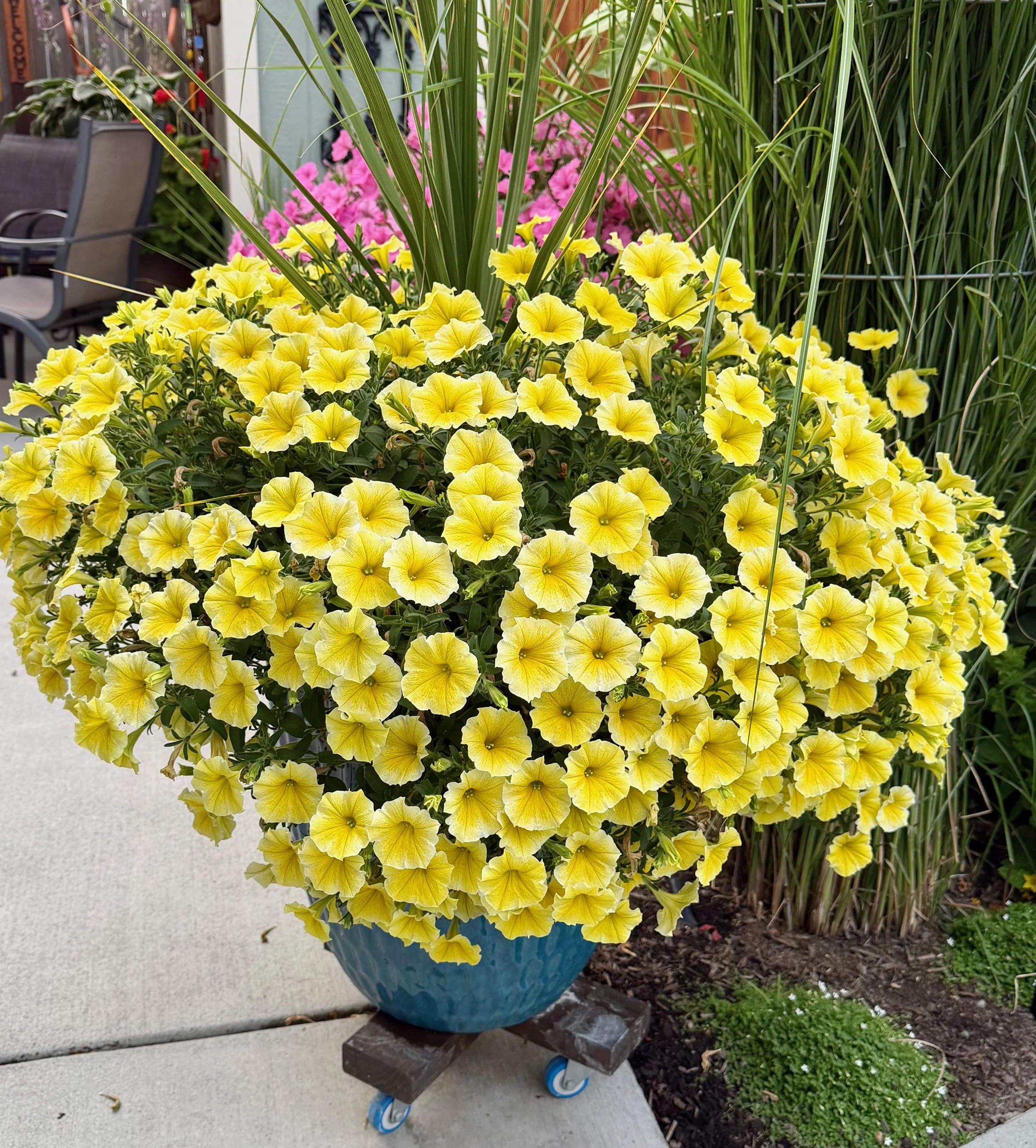
This has been a spectacular year for our petunias. I have them growing in four large pots, with four additional plants in the landscape. Whether they are planted in containers or directly in the ground, I give all my petunias essentially the same care.
At planting time, I add a couple of handfuls of organic granular fertilizer and a handful of slow-release fertilizer. Once the plants are established, I follow up with a weekly application of water-soluble fertilizer. All the petunias are connected to drip irrigation, which I have set to run every other day. During hot spells, I usually give them an extra drink of water. This year’s petunias were all planted on May 7, 2026.
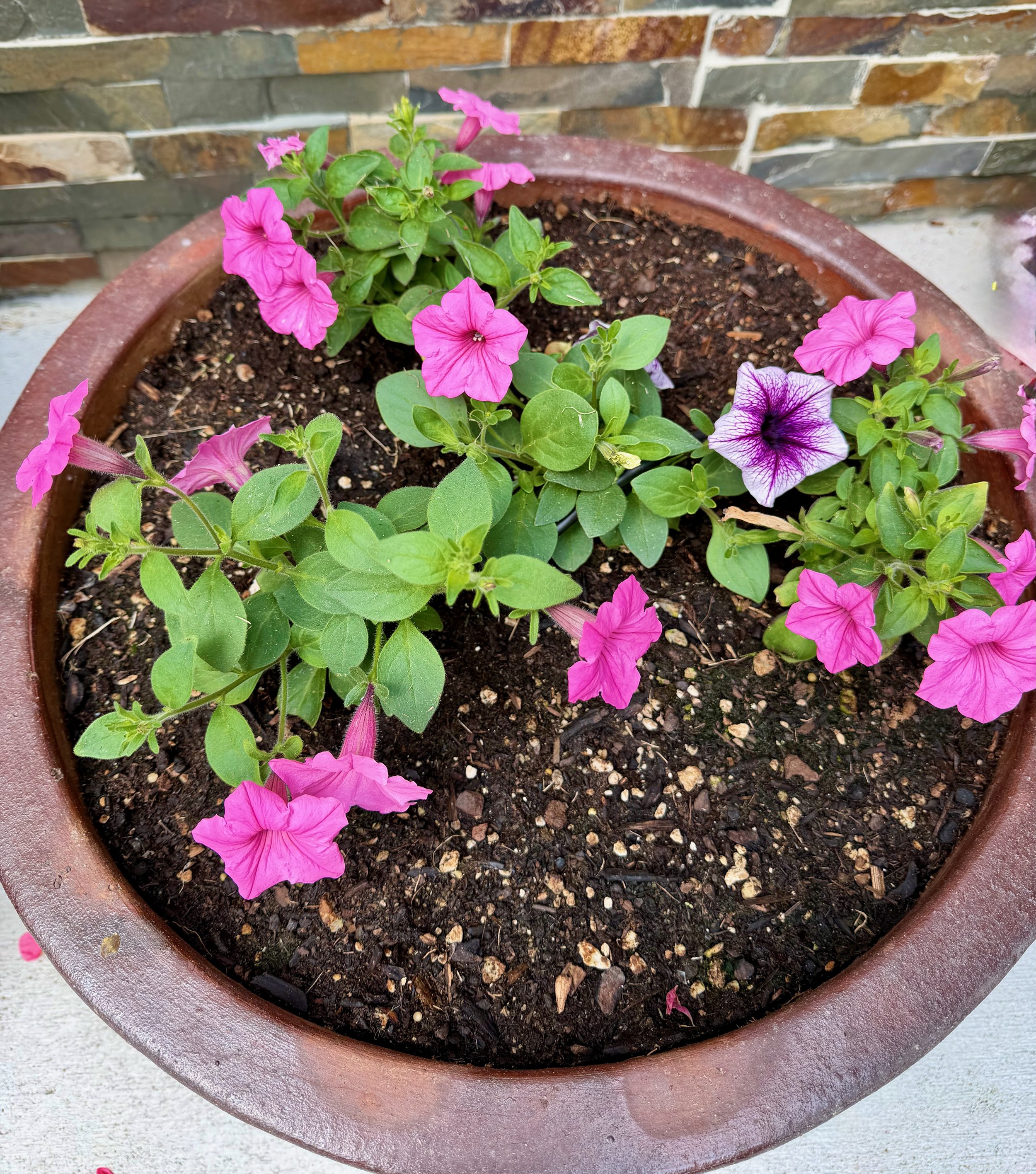
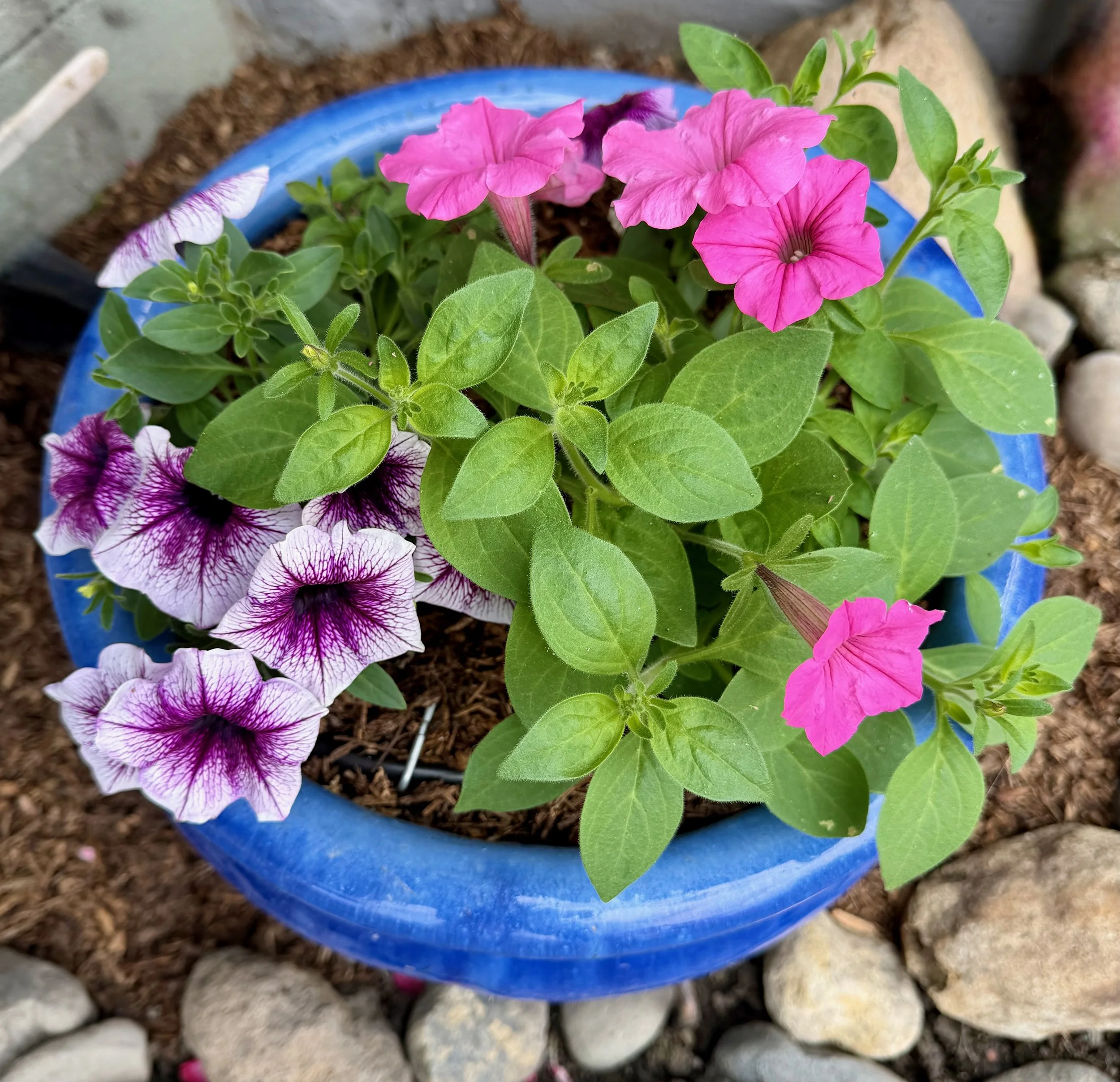
These two identical containers were planted around May 5. One was placed against an east-facing wall, where it receives full afternoon sun, while the other was placed along a railing that receives fewer hours of sunlight.
It is now July 21, and within the next few days I will give the petunias growing in planters a haircut. After pruning, I will thoroughly drench the potting soil with water and follow with a dose of liquid fertilizer. This midsummer regenerative pruning helps prevent the plants from becoming flat, open in the center, and leggy. Within about 10 days, they should be filling out with fresh growth and flowers that will continue into fall. I plan to share a short before-and-after post demonstrating the procedure and its results.
This Year’s Petunia Selection
All of this year’s petunias are from Proven Winners unless otherwise noted:
Crazytunia® Cosmic Purple from Tom DeSanto Greenhouse
A Lesson in Petunia Vigor
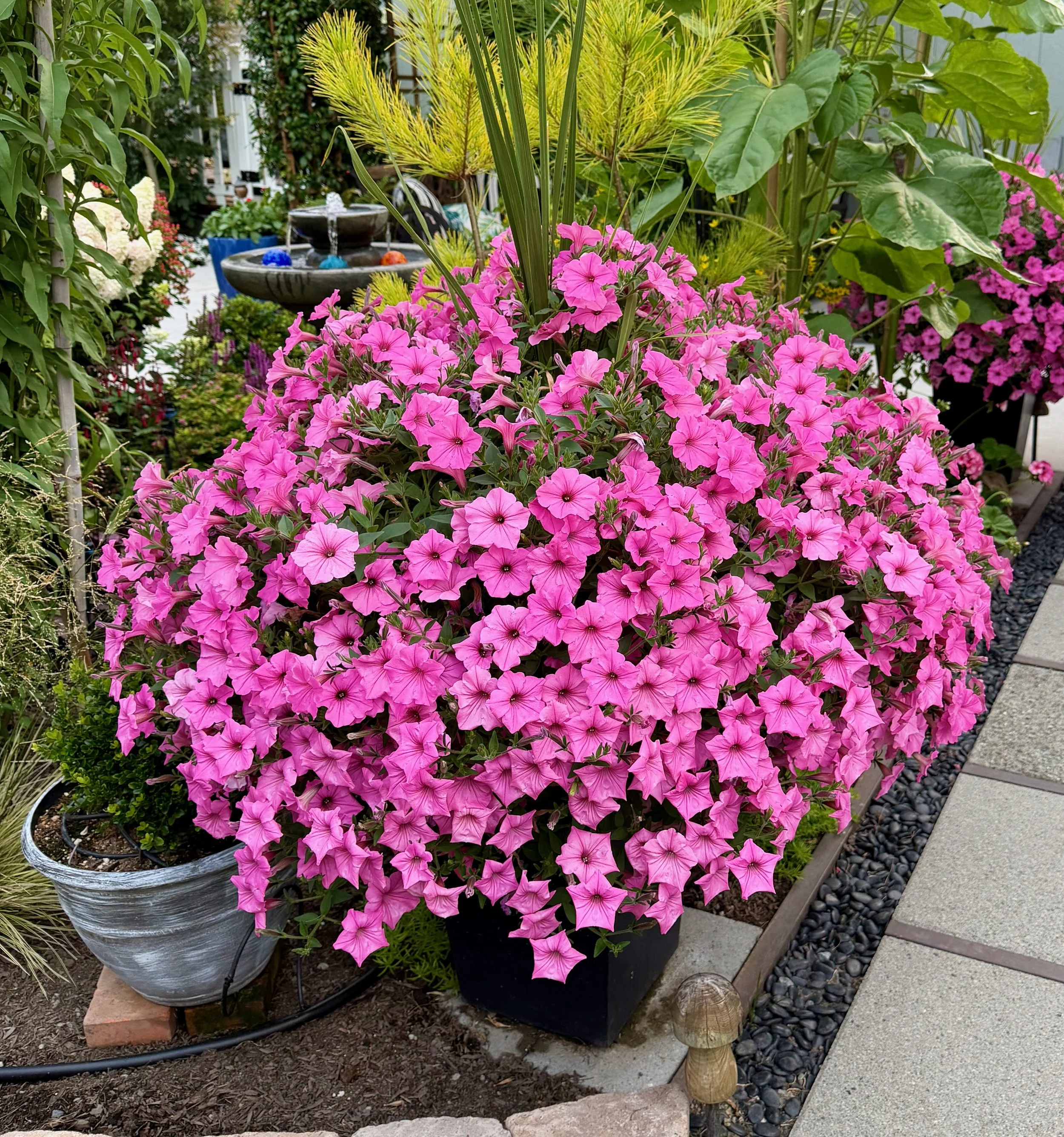
Just a heads-up: some petunias are very aggressive growers. In this year’s selection, that is certainly true of Supertunia Vista® Bubblegum® and Supertunia® Black Cherry®.
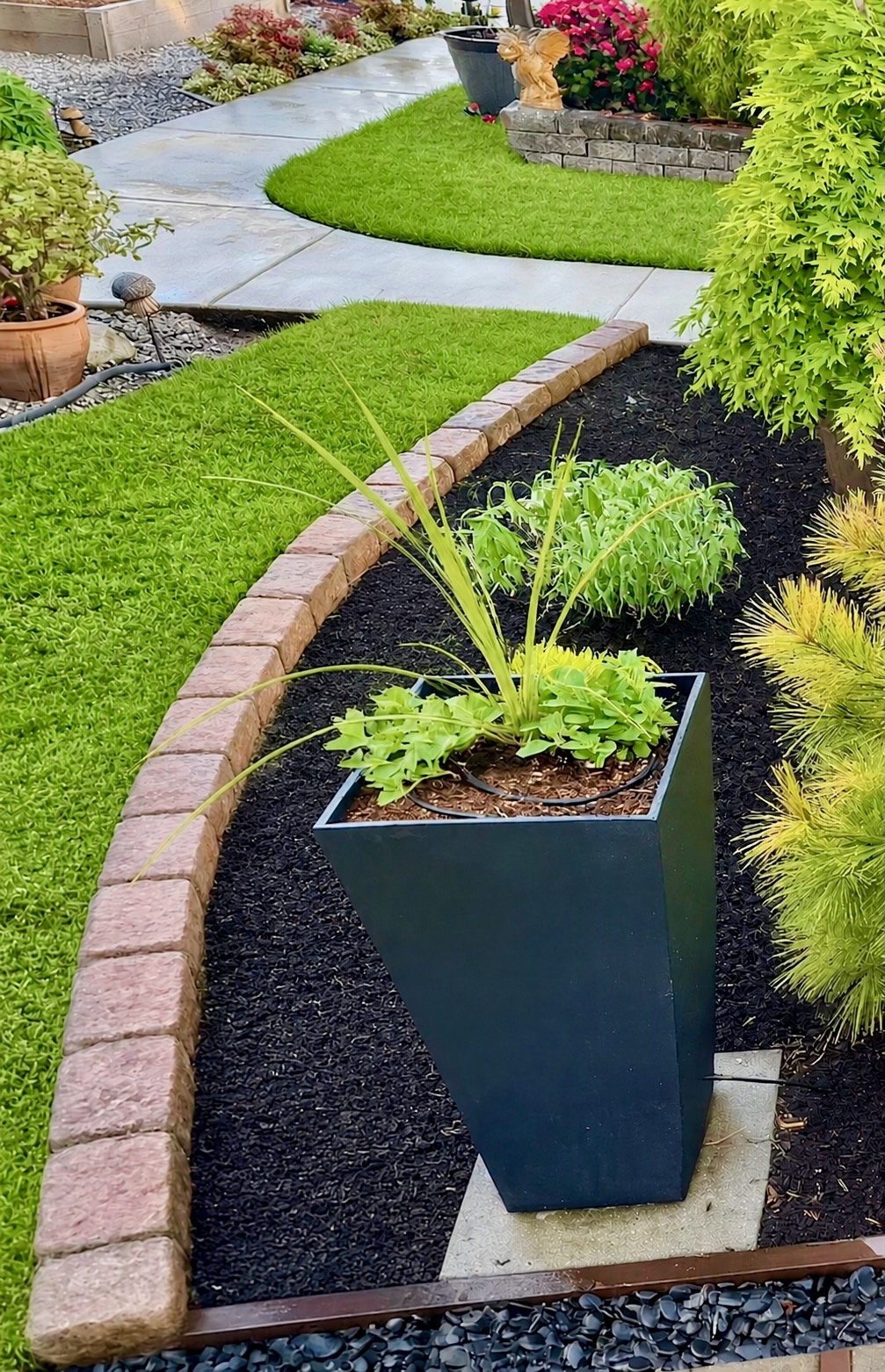
In each of the two black planters, I planted two Supertunia Vista® Bubblegum® petunias, one Dracaena “Spike,” and one Lemon Coral® sedum. The petunias quickly engulfed the sedum, so I moved it to another location where it would have more room and light.
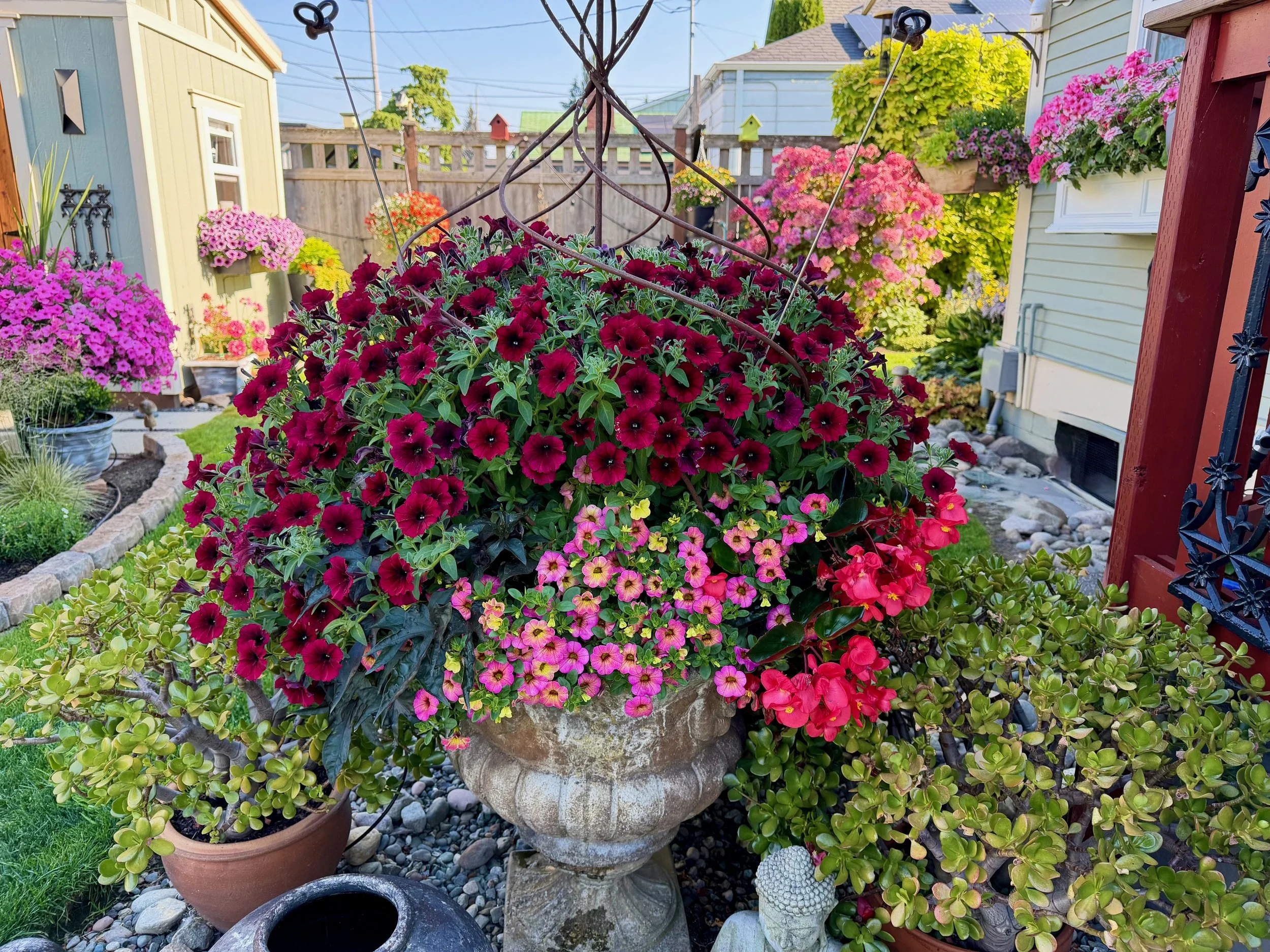
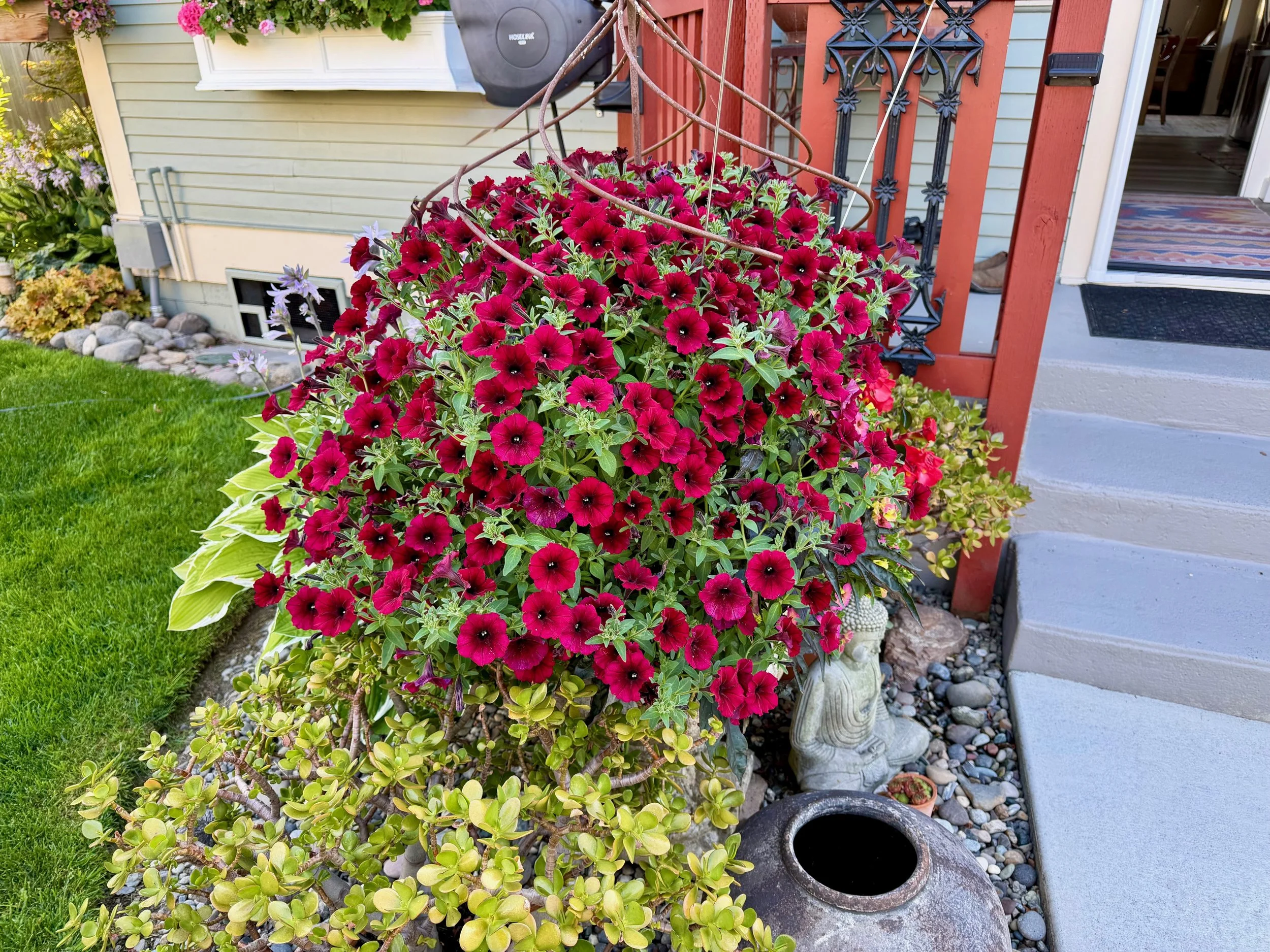
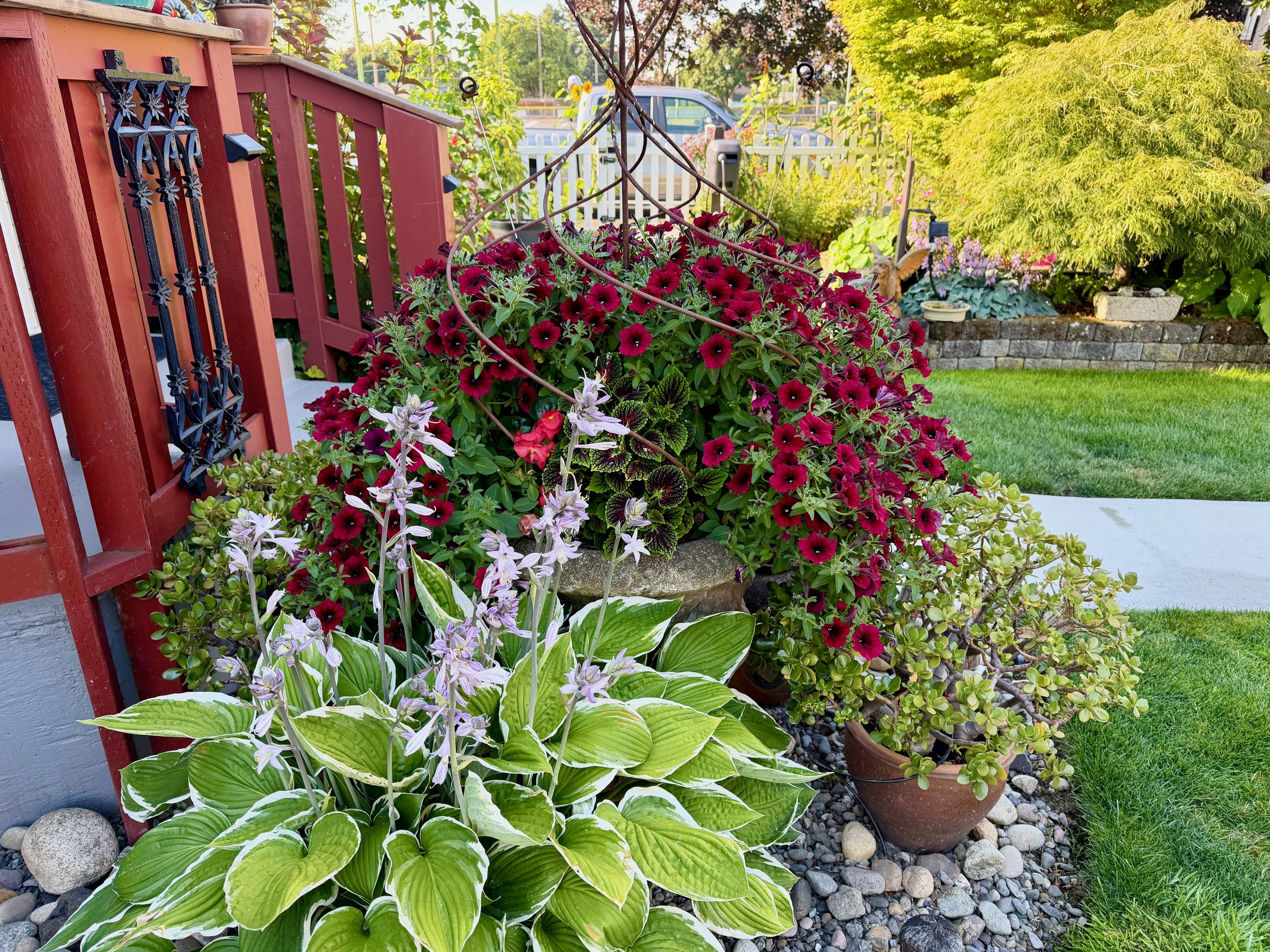
I also planted two Supertunia® Black Cherry® petunias in a concrete urn with one coleus, one Surefire Cascade® Red begonia, and two Superbells Magic® Pink Lemonade calibrachoas. The petunias have taken over nearly the entire planter. I have pruned them back in hopes of allowing the other plants to receive more light and catch up, but I am not convinced it is going to work. Every time I prune the petunias, they respond with even more vigorous growth.
The lesson learned is to give vigorous petunias plenty of room and choose their container companions carefully. Supertunia Vista® Bubblegum® and Supertunia® Black Cherry® are spectacular plants, but they may be better used alone or paired with equally vigorous companions.
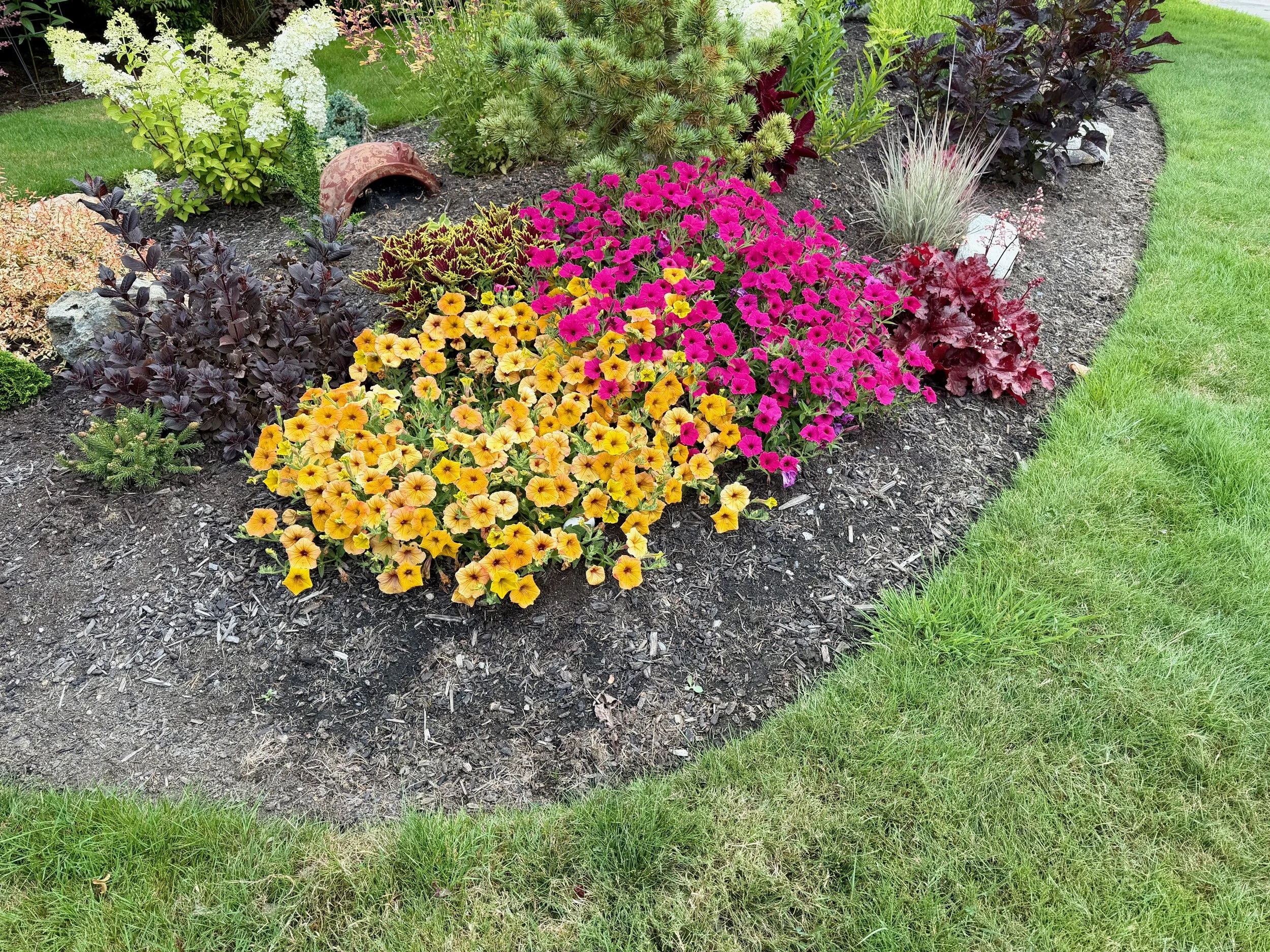
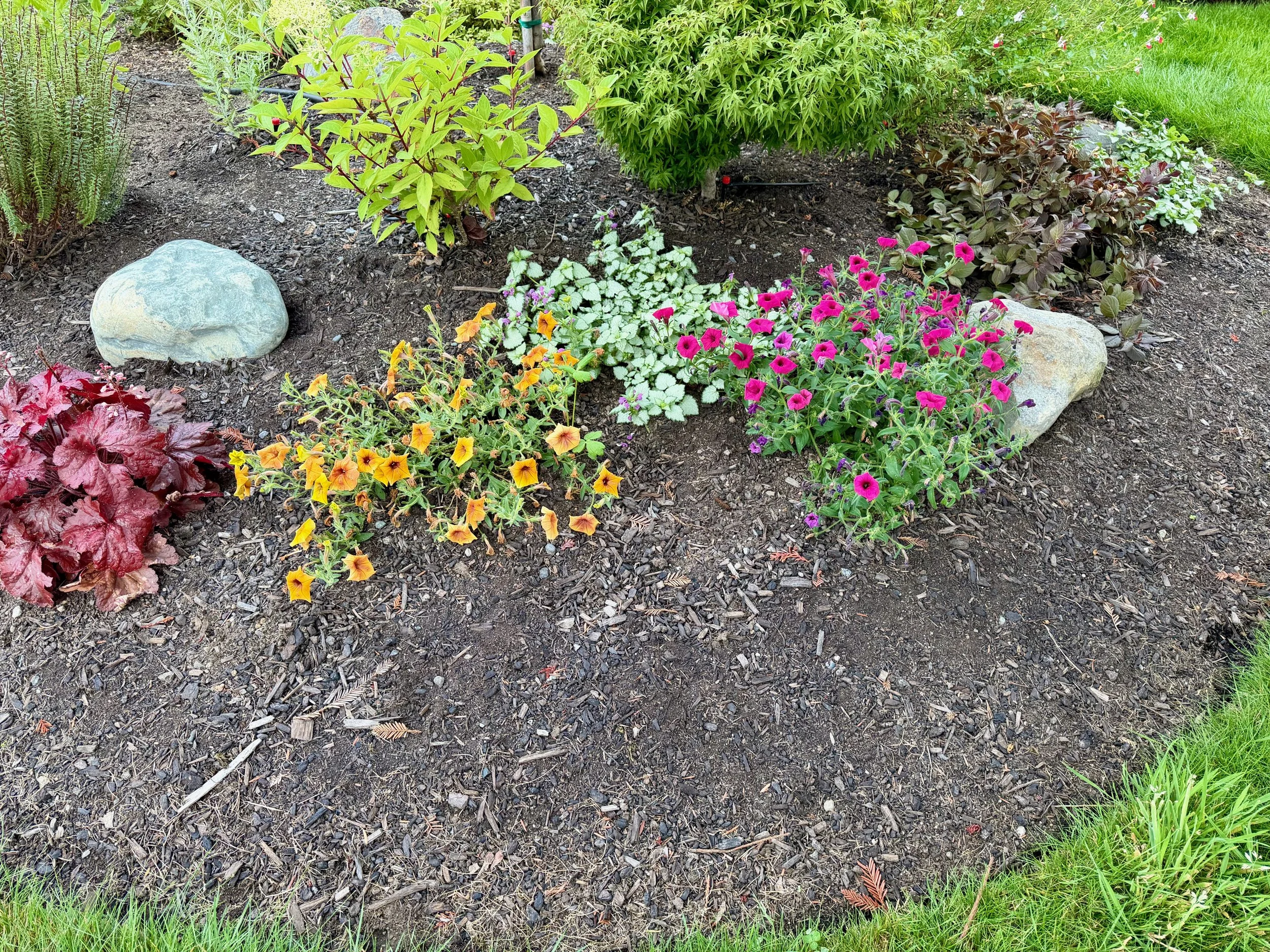
Here’s a striking example of how sunlight affects a plant’s overall performance. These two side-by-side petunias are the same variety, were planted on the same day, and receive the same fertilizer. The only significant difference is their exposure: one grows in full sun, while the other receives part sun. What a difference a few extra hours of sunlight can make!
Whether you prefer the fragrance and informal charm of an old-fashioned petunia or the flower power and reliability of a modern hybrid, there is a variety suited to nearly every sunny garden. With their extended flowering season, remarkable range of colors, and diverse growth habits, petunias remain some of the most versatile and rewarding annual flowers a gardener can grow.